

Anúncios
Stepping into a workshop for the first time is both exciting and a bit daunting. Many people want to build something beautiful but don’t know where to start. Choosing the right beginner woodworking projects helps you gain confidence and learn essential skills.
Working with your hands gives a sense of accomplishment that digital tasks can’t match. You’ll see how basic tools turn raw lumber into useful items for your home. This journey starts with mastering basic cuts and joints on simple tasks.
Starting with smaller projects prevents frustration and keeps your budget in check. Our guide shows several practical options that need minimal tools and time. By focusing on these early efforts, you build a strong foundation for more complex projects later.
Anúncios
Making pieces for yourself or as gifts adds lasting value. You don’t need a huge workshop to achieve professional results. Just a few reliable hand tools and a sturdy table can help you succeed today.
Getting Started with Woodworking as a Beginner
Starting your woodworking journey is easy. Here are some simple ideas to get you going. First, set up a safe and efficient workspace. Organize your tools and materials well to work better and avoid accidents.
Understanding woodworking safety is key. Wear safety glasses and ear protection. Also, make sure your workspace has good air flow.
Anúncios
Here are some steps to begin:
- Plan your projects well, thinking about the tools and materials you need.
- Begin with simple projects that need few tools and materials.
- Practice with your tools to know what they can do and what they can’t.
Beginners often make useful items for the home. Try making cutting boards, simple boxes, or shelves. These projects boost your confidence and teach you the basics.
Essential Tools Every Beginning Woodworker Needs
Starting woodworking as a beginner means knowing the key tools. These tools are vital for your projects’ success. DIY woodworking is an exciting journey, and the right tools are crucial.
Measuring and Marking Essentials
Measuring and marking are basic steps in woodworking. Getting these right ensures your projects fit perfectly.
- Tape Measure: A 25-foot tape measure is versatile and useful for most projects.
- Square: Ensures your corners are square and your measurements are accurate.
- Marking Gauge: Helps in making consistent markings for joints and cuts.
Cutting and Shaping Tools
Cutting and shaping wood are key skills in woodworking. The right tools make these tasks easier and more precise.
- Table Saw: Essential for making straight cuts in wood.
- Hand Saw: Useful for detailed cuts and when working without power.
The Circular Saw and Jigsaw
A circular saw is perfect for making straight cuts in lumber. A jigsaw is ideal for curved cuts.
A power drill is indispensable for drilling holes. When used with a driver set, it becomes a versatile tool for driving screws and other fasteners.
| Tool | Primary Use |
|---|---|
| Power Drill | Drilling holes and driving screws |
| Driver Set | Driving various screw heads |
Investing in these essential tools will provide a solid foundation for DIY woodworking for beginners. It makes completing projects successfully easier.
Choosing the Right Wood and Materials
Knowing the different types of wood and materials is key for beginners. The success of a woodworking project depends a lot on the materials used. With so many options, picking the right one can be tough.
Wood is the main material in most woodworking projects. It comes in various types, each with its own traits. Hardwoods and softwoods are the two main categories.
Hardwoods come from deciduous trees and are denser and pricier than softwoods. Softwoods, from coniferous trees, are softer and cheaper. The choice between them depends on the project’s needs, like durability and finish.
| Type of Wood | Characteristics | Common Uses |
|---|---|---|
| Oak | Strong, durable, resistant to wear | Furniture, flooring |
| Pine | Soft, lightweight, easy to work with | Beginner projects, furniture frames |
| Maple | Hard, resistant to scratches and stains | High-end furniture, cutting boards |
When picking wood for beginner projects, consider the grain, moisture, and cost. Understanding these factors helps beginners make good choices. This ensures their projects meet expectations.
In conclusion, picking the right wood and materials is crucial in woodworking. By knowing the different types of wood and their traits, beginners can succeed. They can create projects that are both useful and look great.
Safety Fundamentals for Beginner Woodworkers
For a safe and fun woodworking experience, knowing the basics is key. Safety should always be your first thought when using power tools and wood.
Beginner woodworkers need to get familiar with safety gear. This includes safety glasses, ear protection, and a dust mask. Safety glasses protect your eyes from sawdust and debris. Ear protection keeps you safe from loud tool noises. A dust mask stops you from breathing in wood dust and particles.
Keeping your workshop safe is also vital. Make sure your workspace has good air flow and is not cluttered. A messy workspace can cause accidents. Also, keep your tools in good shape and use them as the maker says.
To avoid accidents, keep loose clothes tied back and avoid jewelry that can get caught. Also, make sure your long hair is tied back. It’s best not to wear gloves with some power tools, as they can get caught.
Key Safety Practices
- Always wear safety gear when working with power tools.
- Keep your workspace clean and organized.
- Follow the manufacturer’s instructions for tool usage.
- Avoid distractions while working with power tools.
- Regularly inspect your tools for damage or wear.
By sticking to these safety tips, beginner woodworkers can greatly lower the chance of accidents. This way, they can enjoy making simple woodworking projects.
Simple Wooden Box: Your First Project
Woodworking projects for beginners often start with the basics. A simple wooden box is a perfect example. It covers essential skills like measuring, cutting, and assembling wood.
To begin, you’ll need a few basic tools and materials. The type of wood you choose affects the box’s appearance and durability. Softwoods like pine are easier for beginners, while hardwoods are more durable.
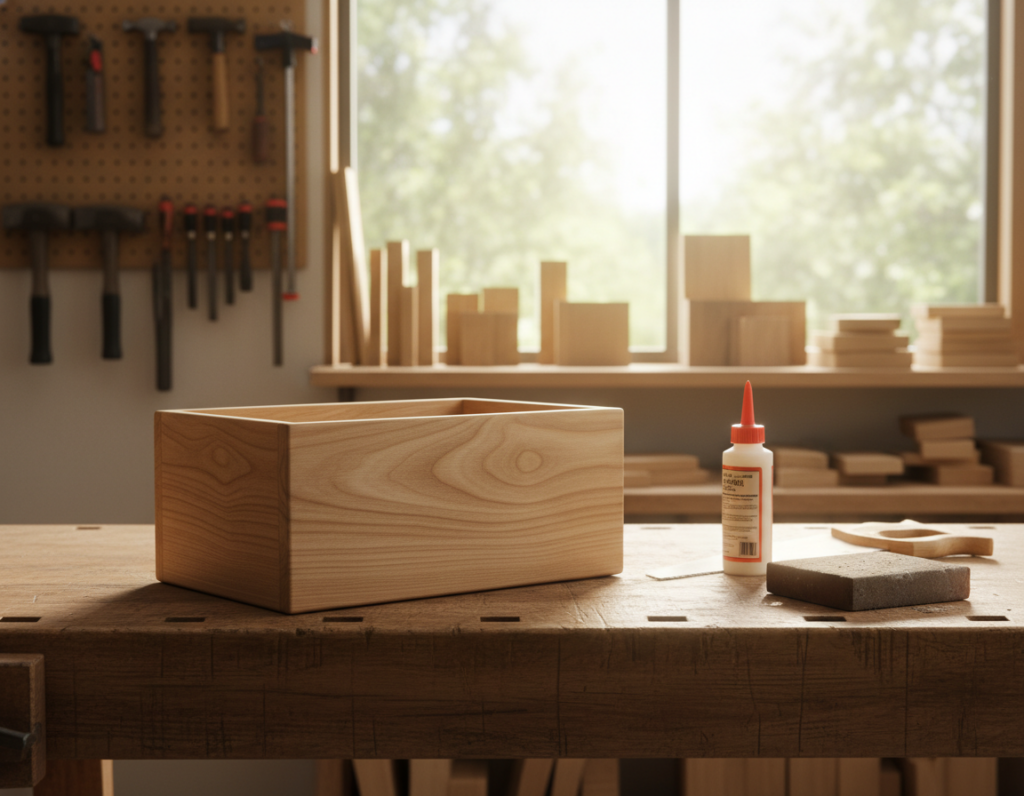
The process involves planning your box’s dimensions, cutting the wood, and assembling it. You’ll use joinery techniques. Sanding and finishing are crucial for a smooth and attractive finish.
Through this project, beginners get hands-on experience with woodworking tools and techniques. It teaches the importance of precision and patience in woodworking.
By completing a simple wooden box, you’ll have a functional item. You’ll also feel a sense of accomplishment. This confidence will help you tackle more complex projects.
Building a Basic Floating Shelf
Woodworking projects for newbies don’t get much simpler than building a basic floating shelf. It’s a great starting point for beginners. A floating shelf adds storage and style to any room, making it a rewarding project.
To begin, you’ll need some basic tools and materials. You’ll need wood, like oak or maple, for the shelf. You’ll also need a saw, a drill, and a sander for the project.
- 1 piece of wood (e.g., 3/4″ thick plywood or solid wood) for the shelf
- Hidden shelf brackets
- Drill and drill bits
- Saw (circular or hand saw)
- Sander
- Measuring tape
- Level
- Screws and wall anchors
Now, let’s look at the step-by-step instructions:
- Measure the space for the shelf and decide on its size.
- Cut the wood according to your measurements.
- Sand the cut edges to smooth them out.
- Attach the hidden brackets to the wall, ensuring they are level.
- Mount the shelf onto the brackets.
By following these steps, you’ll create a functional and stylish floating shelf. It adds a touch of your craftsmanship to your home. This project improves your woodworking skills and provides a practical storage solution.
Creating a DIY Cutting Board
Making a DIY cutting board is a great project for beginners. It’s both useful and shows off your skills. You can use it every day or give it as a gift. First, pick the right wood.
Hardwoods like maple, walnut, or cherry are best for cutting boards. They last long and don’t get scratched or cut easily. Softwoods like pine are too soft and won’t last.
After picking your wood, cut it to the size and shape you want. You can go simple or try something more complex. Sanding is key to make the surface smooth and even.
To put the cutting board together, you might need to glue pieces. Use a food-safe glue so it’s safe for the kitchen. Clamp everything together and wait for it to dry.
After it’s dry, add a finish to protect the wood. Mineral oil or beeswax are good choices because they’re safe for food. Keeping it oiled will make it last longer.
Building a DIY cutting board is a fun project. It’s a great way to learn woodworking. You can do it with basic tools and materials.
Best Beginner Woodworking Projects for Home Decor
Woodworking projects for home decor are great for beginners. They help you improve your skills and make your home look better. Creating something yourself can be very rewarding.
There are many woodworking projects perfect for beginners. These projects help you learn the basics and make useful items for your home. They also make your home look better.
Cutting Miter Joints for Corners
Cutting miter joints is a key skill in woodworking. A miter joint is made by cutting two pieces of wood at a 45-degree angle. Making precise cuts is important for a good joint.
Assembly and Backing Installation
After cutting your pieces, it’s time to assemble them. You’ll use fasteners or adhesives to join them. For items like shelves, adding a backing makes them stable and complete.
Selecting and Spacing Hardware
Hardware like knobs and hinges can be both useful and stylish. Choosing the right hardware depends on your project’s style and needs. It’s also important to space it correctly for looks and function.
Building Stable Platform Levels
For projects with a base, making sure it’s level is key. You’ll use tools to check and adjust as needed. A stable base is important for safety and stability.
Adding Decorative Elements
Adding decorative touches can make your project stand out. This could be carvings, moldings, or finishes that match your home. It turns a useful item into something beautiful.
By using beginner woodworking plans and practicing these skills, you can make beautiful items for your home. Whether it’s a simple cutting board or a complex shelving unit, careful planning and execution are the keys to success.
Building a Small Step Stool
Woodworking projects for beginners are hard to beat with a small step stool. It’s a great way to hone your skills and get something useful for your home.
You’ll need basic tools and materials to start. You’ll need wood, wood glue, nails or screws, and a hammer or drill. The size can vary, but a typical stool is about 12 inches tall, 8 inches wide, and 12 inches deep.
First, cut the wood to the right size. Then, use wood glue and nails or screws to put it together. Sand it to make it smooth. Always wear protective eyewear and keep loose clothes tied back when using power tools.
Materials and Estimated Costs
| Material | Quantity | Estimated Cost |
|---|---|---|
| Wood (pine or oak) | 1 piece (depending on size) | $10-$20 |
| Wood Glue | 1 bottle | $5-$10 |
| Nails or Screws | 1 pack | $5-$10 |
Building a small step stool is a rewarding project. It boosts your woodworking skills and adds a useful item to your home. It’s a perfect project for beginners to build confidence and competence.
Tips for Improving Your Woodworking Skills
Getting better at woodworking is a journey. It’s about learning from mistakes and trying new things. As you get better, keep pushing yourself and follow the best ways to do things.
Practicing often is key to getting better. Doing projects regularly helps you get better at using your tools. Beginners should start with easy projects like a wooden box or a simple shelf.
Making mistakes is a big part of learning. Figuring out what went wrong and how to fix it helps a lot. Also, trying new tools and techniques can make your work better.
- Practice regularly to develop your skills and build confidence.
- Experiment with different types of wood and techniques to broaden your knowledge.
- Join a woodworking community or find a mentor to learn from others’ experiences.
- Invest in quality tools that can make your work more efficient and precise.
Here’s a guide to help you in your woodworking journey. It compares important skills for beginners:
| Skill | Description | Importance Level |
|---|---|---|
| Measuring Accuracy | The ability to accurately measure and cut wood. | High |
| Sanding and Finishing | Techniques used to smooth out wood surfaces and apply finishes. | Medium |
| Joinery Techniques | Methods used to join wood pieces together securely. | High |
By working on these skills and practicing, you’ll get better at woodworking. You’ll be ready to take on more challenging projects.
Conclusion
Starting your woodworking journey can be thrilling yet daunting. But, taking on beginner-friendly projects makes it easier. You’ll learn new skills and gain confidence as you go.
Begin with simple tasks like making a wooden box or a small step stool. Each project teaches you important techniques. You’ll get to know different tools and materials better.
Remember, woodworking is all about patience, practice, and never giving up. As you keep trying new things, you’ll improve your skills. You’ll also open up a world of creative possibilities. So, grab your tools, pick a project that excites you, and start making something special today.