

Anúncios
Woodworking needs precision and safety. Keeping your tools in good shape means every cut is clean and every joint fits right. This guide helps you take care of your valuable tools.
Ignoring your tools can lead to rust and dull blades. Learning to care for your tools saves money and prevents accidents. Regular cleaning and light oiling protect them from moisture.
Key Takeaways:
Anúncios
- Consistent cleaning prevents corrosion and metal decay.
- Sharp blades increase accuracy and user safety.
- Organized storage protects sensitive edges from damage.
This article covers the best ways to carpentry tool maintenance. You’ll learn about professional storage tips and routine checks. A bit of effort now means your tools will last for years.
Knowing what your tools need is key for any craftsman. A regular schedule helps avoid failures during important projects. Start protecting your tools with these easy techniques today.
Why Proper Tool Maintenance Matters for Carpenters
Maintaining carpentry tools is key for quality work, safety, and saving money. It boosts productivity, safety, and job satisfaction for carpenters.
Anúncios
Keeping tools in top shape means they work better for longer. This reduces the chance of accidents on the job.
Good tool care includes cleaning, sharpening, and storing tools right. Clean tools don’t rust, and sharp tools are safer and work better.
The benefits of tool maintenance are clear:
- Tools work better and last longer
- Jobs are safer
- Less money spent on new tools
- Work quality goes up
Benefits of Regular Tool Maintenance
Let’s look at how maintained tools compare to neglected ones.
| Aspect | Maintained Tools | Neglected Tools |
|---|---|---|
| Performance | Works best, cuts well | Not sharp, cuts poorly |
| Safety | Safe to use, fewer accidents | More accidents because it breaks |
| Longevity | Lasts longer, less wear | Short life, needs replacing often |
The table shows why keeping tools in good shape is important. It ensures better work and safety for carpenters.
In short, tool maintenance is crucial for carpenters. It boosts tool performance, safety, and saves money. By caring for tools, carpenters improve their work and profits.
Essential Supplies for Carpentry Tool Maintenance
Starting your DIY tool maintenance journey is easy with the right supplies. You’ll need various materials and tools to keep your carpentry tools in top shape.
Cleaning solutions are key to remove dirt and grime that can harm your tools. Use a soft cloth and mild soap for basic cleaning. For tough stains, you might need special cleaning products.
Sharpening stones are vital for tools with cutting edges. You can choose from water stones, oil stones, and diamond stones, each for different tasks.
Proper storage is also crucial. Use toolboxes, bins, and hooks to keep your tools organized and safe from damage.
With these essential supplies, you’ll be ready to maintain your carpentry tools effectively. Follow a detailed tool maintenance guide to keep your tools in great condition.
How to Clean Your Carpentry Tools Properly
Cleaning your carpentry tools right is key to keeping them working well. It stops debris and residue from building up. This buildup can slow down your tools and make them wear out faster.
Cleaning Chisels, Planes, and Hand Saws
Chisels, planes, and hand saws are very important for carpenters. Begin by brushing off any visible dirt with a soft-bristled brush. Use a cloth with mineral spirits to clean chisels and planes, focusing on the edges.
Hand saws can be cleaned the same way, but make sure to dry them well to avoid rust.
If there’s tough residue, a soft-bristled toothbrush and mild soap can help. But, be careful not to scratch the tools.
Cleaning Measuring and Marking Tools
Tools like tape measures, squares, and pencils need different cleaning methods. A dry cloth is usually enough for tape measures. For a deeper clean, use a damp cloth, but dry it well to avoid rust.
Squares and metal marking tools can be cleaned with a soft cloth and mineral spirits. Pencils and markers should be checked for wear and replaced when needed.
By following these tool care tips, you can keep your carpentry tools in top shape. This ensures they’ll help you with your woodworking projects for a long time.
Sharpening Techniques for Common Carpentry Tools
Mastering sharpening techniques is key to getting the most from your carpentry tools. Sharpening is vital for tool performance and longevity.
Using Whetstones and Water Stones
Whetstones and water stones are essential for sharpening carpentry tools. They come in different grits, from coarse to fine, for various sharpening tasks.
To sharpen effectively, start with the right grit for your tool’s condition. Use a coarse grit for dull tools to remove metal fast. Then, move to finer grits for a finer edge.
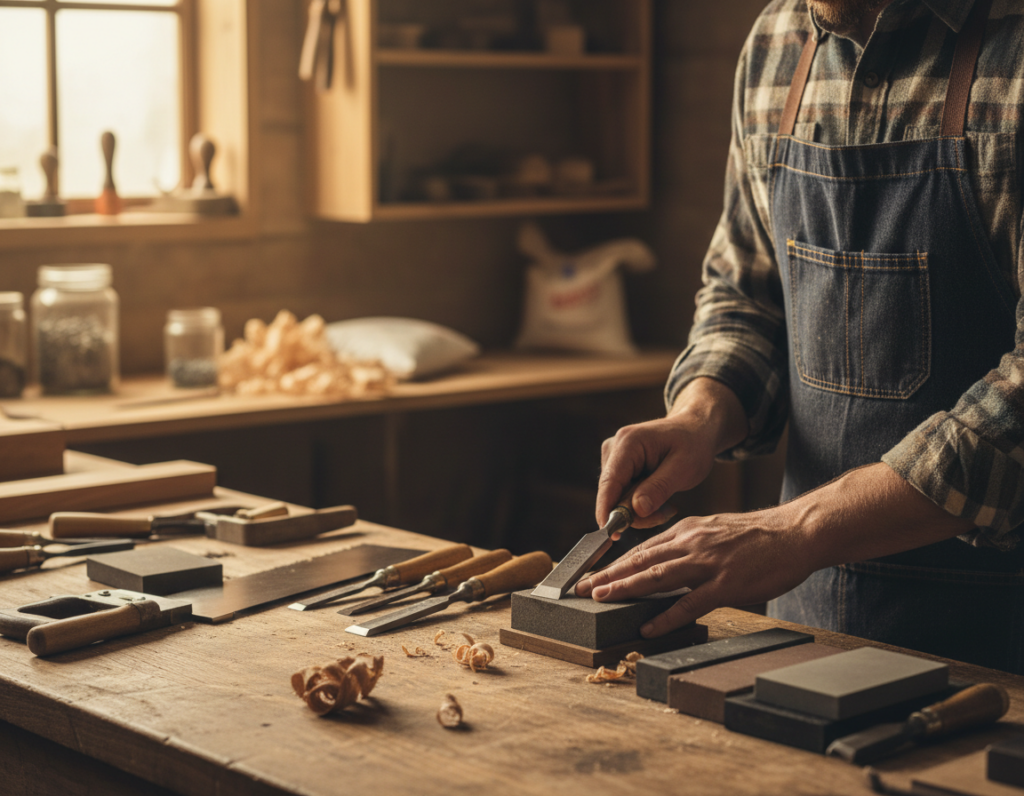
A honing guide is a great tool for consistent sharpening angles. It keeps the angle precise for better tool performance and less wear.
To use a honing guide, attach your tool as the manufacturer suggests. Then, move the tool over the whetstone or water stone. This method ensures a sharp, even edge.
- Improves sharpening accuracy
- Reduces the risk of tool damage
- Enhances tool performance and longevity
By adding these sharpening techniques to your DIY tool care, you’ll see big improvements. Regular sharpening and following best practices will keep your tools in great shape.
Preventing and Removing Rust from Your Tools
Keeping your carpentry tools in good shape is key. Rust can weaken and shorten their life. It’s important to know how to prevent and remove rust.
To stop rust, keep your tools dry and use protective coatings. Moisture is a big enemy of tools. Store them in a dry place. Also, apply a coating to protect them from moisture.
- Store tools in a dry environment to minimize exposure to moisture.
- Apply rust-inhibiting coatings or lubricants to metal surfaces.
- Regularly clean tools to remove dirt and debris that can retain moisture.
- Use desiccants or silica gel packets in toolboxes to absorb moisture.
- For existing rust, use a rust remover or a mixture of baking soda and water to clean the affected area.
By following these tips, you can make your tools last longer. Regular care not only stops rust but also keeps your tools working well. This saves you time and money.
Best Practices for Carpentry Tool Maintenance
To keep your carpentry tools in great shape, follow these tips. Good maintenance makes your tools last longer and work better. This improves the quality of your projects.
Cleaning your tools is key. Clean them after each use to stop debris and residue buildup. This prevents rust and dulling. Section 4 talks about the right cleaning methods and materials.
Sharpening tools is also important. Dull tools are less effective and can be dangerous. Section 5 shows how to sharpen common carpentry tools. Regular sharpening keeps your tools sharp and precise.
Stopping and removing rust is crucial too. Rust can harm a tool’s performance and lifespan. Section 6 explains how to prevent and remove rust. Use a rust inhibitor and keep tools dry to prevent rust.
Here are some essential best practices:
- Regularly check your tools for wear or damage.
- Clean your tools after each use.
- Sharpen cutting tools regularly.
- Apply a rust inhibitor to metal parts.
- Store tools in a dry, organized way.
By following these best practices, you can make your carpentry tools last longer. This saves money by reducing the need for frequent replacements. It also ensures your work quality and consistency stay high.
Regular maintenance also helps spot problems early. This allows for quick fixes. It prevents small issues from becoming big problems.
Proper Storage Solutions for Woodworking Tools
Keeping your woodworking tools in good shape is key. Proper storage keeps your workspace tidy and protects your tools. It prevents damage and keeps them working well.
It’s important to have a spot for each tool. Use toolboxes, pegboards, or wall-mounted systems for this. This way, you can find what you need fast, saving time and avoiding tool damage.
- Tool chests and cabinets for bigger tools and equipment
- Pegboards for hanging hand tools you use often
- Wall-mounted shelves for items you don’t use as much
- Drawer organizers for small tools and accessories
Think about your tools, workshop space, and what you like when picking storage. For example, small tools fit well in drawer organizers. But, bigger tools need a strong tool chest or cabinet.
Best Practices for Tool Storage
To get the most out of your storage, follow these tips:
- Clean your tools before putting them away to stop dirt buildup.
- Keep tools in a dry place to avoid rust and corrosion.
- Use protective cases or covers for delicate tools.
- Label your storage to make it easy to find what you need.
By using the right storage and following these tips, you can keep your woodworking tools in top shape. This ensures they work well for a long time.
Creating a Tool Maintenance Schedule
A good tool maintenance schedule is key for a carpenter’s success. It keeps tools working well, cuts down on downtime, and boosts work quality.
First, list all your tools and what they need for upkeep. This includes cleaning, sharpening, and checking for damage. Think about how often you use each tool and what the maker says about maintenance.
Use reminders to keep up with tool care. You can use a planner, digital calendar, or app to set reminders. For example, pick a day each week or month for tool upkeep, based on your work and tool use.
Integrating Tool Care into Your Workflow
Make tool care a part of your daily routine. Clean tools right after use, sharpen cutting tools often, and store them right after each job.
| Tool | Maintenance Task | Frequency |
|---|---|---|
| Hand Saws | Sharpening | Monthly |
| Drill Bits | Cleaning and Inspection | Weekly |
| Chisels | Sharpening and Storage Check | Bi-Weekly |
Sticking to a maintenance plan helps tools last longer and work better. This saves money and boosts your work quality and speed.
Adjusting the Schedule as Needed
Change your maintenance plan as your projects and work load change. Check your tasks and how often to do them to keep them up to date.
Conclusion
Keeping your carpentry tools in good shape is key to better work and longer tool life. By following the tool care tips in this guide, you can keep your tools working well.
It’s important to clean, sharpen, and store your tools right. These steps boost tool performance and make your workspace safer.
Adding a maintenance routine to your work can stop tools from getting worse. It also saves you money on repairs or new tools. This smart care approach will help your projects and your wallet.