

Anúncios
Learning to lay bricks can transform your home. It’s a vital skill for any building project in America. Many enjoy DIY tasks that let them work with their hands.
This hobby can save you money and enhance your living space. Knowing the basics helps you build structures that last. Masonry is both a science and an art.
Understanding basic bricklaying for beginners is key for quality work. It lets you create lasting paths, walls, and decorations. You’ll take pride in your work and boost your property’s value.
Anúncios
Solid masonry gives any yard or structure a timeless look. This guide teaches you to handle a trowel and mortar. We aim to make it easy for everyone to follow.
Get ready to build something beautiful and lasting today. These steps will help you avoid common mistakes. These skills are a valuable addition to your DIY toolkit.
Anúncios
- Masonry is a foundational skill for various home improvement and construction projects.
- Learning the basics allows DIYers to save on labor costs while creating durable structures.
- Starting with the right mindset and tools ensures professional-looking results for any project.
Understanding the Basics of Bricklaying
Bricklaying is a skill that needs precision and patience. It starts with understanding its basic principles. For beginners, knowing the basics is key to building a strong foundation in this craft.
One important part of bricklaying is knowing the different types of bonds. A bond is the pattern in which bricks are laid. It ensures the structure’s strength and stability. Common bonds include the stretcher bond, header bond, and English bond, each used for specific structures.
Keeping the level and plumb is also critical. Each brick must be perfectly level and plumb for the wall’s stability. Tools like a spirit level and a plumb line are used for this.
Knowing basic terms is also essential. Terms like “course” (a layer of bricks), “mortar” (the mixture holding bricks together), and “joints” (spaces between bricks filled with mortar) are key. They help in communication and understanding among bricklayers.
By mastering these basics, beginners can build the skills needed for more complex projects. It’s a step-by-step process that requires patience, practice, and dedication.
Tools Required for Bricklaying
To master easy bricklaying methods, you need the right tools. Bricklaying is a craft that requires precision, patience, and the correct equipment. The quality of the tools can significantly impact the outcome of the project.
The primary tools needed for bricklaying include trowels, levels, hammers, and spirit levels. A trowel is used for applying and spreading mortar. A level ensures that the bricks are laid evenly and the structure remains straight. A hammer is used for tapping bricks into place and breaking bricks to fit.
Maintaining these tools is key for their longevity and performance. Regular cleaning and proper storage can prevent damage. This ensures they remain in good condition.
Here’s a list of the essential tools:
- Trowel
- Level
- Hammer
- Spirit level
- Brick tongs
Investing in high-quality tools may seem expensive at first. But it pays off in the long run. It reduces the need for frequent replacements and ensures better results.
Preparing the Work Area
The first step in learning to bricklay is to clear and prepare the work area. A well-prepared site is key for a successful bricklaying project. It involves several important steps to get the site ready for construction.
First, clear the site of any debris, plants, or obstructions. This makes a clean space for bricklaying and avoids hazards during construction.
Next, mark the area where you will lay bricks. Use stakes and string to clearly define the space. It’s important to make sure the area is level and meets the project’s requirements.
Building a solid foundation is also critical. The foundation is where the bricks will sit, and it must be strong and level. This is to support the structure’s weight and keep it stable.
To prepare the work area well, follow these steps:
- Clear the site of debris and obstructions.
- Mark out the area where bricklaying will occur.
- Ensure the marked area is level and properly aligned.
- Prepare a solid foundation for the bricklaying.
By carefully preparing the work area, you can improve the quality and durability of your bricklaying work. A well-prepared site makes construction smoother and helps the project’s structural integrity.
Types of Bricks and Mortars Used
Learning beginner masonry starts with knowing about bricks and mortars. The right choice can make your project last longer, look better, and succeed.
Bricks are key in masonry, and they vary in type and use. You’ll find clay, concrete, and engineering bricks. Clay bricks are loved for their lasting quality and beauty, fitting both function and style.
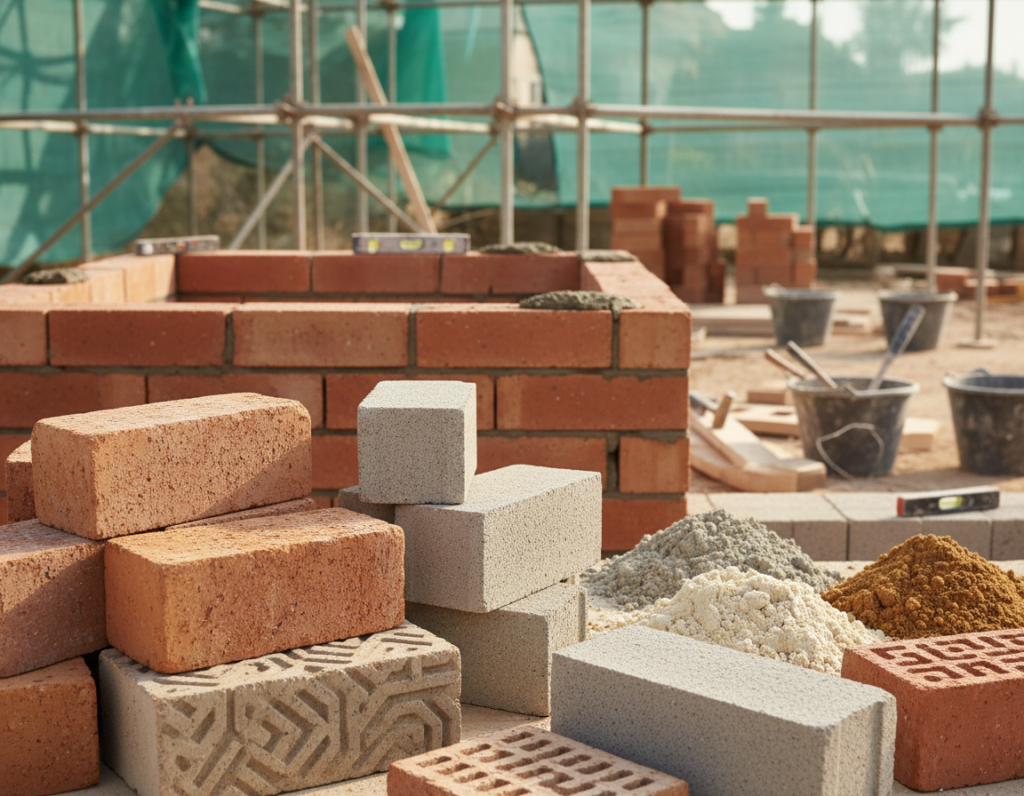
Concrete bricks are strong and used where bricks need to bear a lot of weight. Engineering bricks are super tough and weather-resistant, perfect for foundations and other parts that face harsh weather.
Mortar is what keeps bricks together. The type of mortar used affects how strong and good-looking the brickwork is. You’ll often see cement, lime, and lime-cement mortars. Cement mortar is strong and works well for most projects.
- Cement mortar is a top pick for its strength and durability.
- Lime mortar is flexible and great for keeping historic buildings looking authentic.
- Lime-cement mortar strikes a balance between being strong and flexible, fitting many needs.
Choosing the right brick and mortar depends on the project’s needs. This includes how much weight it will hold, weather exposure, and the look you want. Knowing these details and the materials’ traits is essential for a bricklaying success.
Fundamental Bricklaying Techniques
Learning to lay bricks is a great skill for beginners. It starts with knowing the basic steps. These steps help build a strong and good-looking structure.
Bricklaying needs focus and knowing your tools and materials. First, you must prepare the mortar. It’s what holds the bricks together.
To start, put mortar on the spot where the brick will go. Then, press the brick down gently. Make sure it’s straight and even.
It’s important to make sure the wall is straight and even. Use a spirit level and a plumb line to check.
- Maintaining consistent mortar thickness
- Ensuring bricks are level and plumb
- Using a string line to guide the laying of bricks
By sticking to these basic steps and practicing, beginners can get better. They’ll soon be able to make walls that look professional.
Mixing Mortar: A Step-by-Step Guide
Mixing mortar is a key skill for beginners in bricklaying. It’s essential for the strength and durability of any project.
You’ll need cement, sand, and water to mix mortar. The quality of these ingredients matters a lot.
Ratio of Cement to Sand
The traditional mix is 1 part cement to 3 or 4 parts sand. The right ratio depends on your project’s needs and the environment.
A 1:3 ratio makes a stronger mortar but can shrink and crack more.
Importance of Water Content
Water content is key for the right mortar consistency. Too little water makes it dry and crumbly. Too much makes it weak and wet.
The ideal mortar is workable. It should hold its shape but spread easily with a trowel.
Achieving the Right Consistency
Start by mixing cement and sand in the chosen ratio. Add water slowly, mixing continuously until it’s just right.
Mix small batches to avoid drying out before use.
Step-by-Step Mixing Process
- Prepare Ingredients: Measure out the required amounts of cement and sand according to your chosen mix ratio.
- Mix Dry Ingredients: Combine the cement and sand in a mixing bucket or on a mixing board until they are well integrated.
- Add Water Gradually: Start adding water slowly, mixing the mortar with a trowel or mixing tool.
- Check Consistency: Continuously check the consistency of the mortar as you add water, aiming for a workable mix.
- Final Mix: Once the right consistency is achieved, give the mortar a final mix to ensure everything is well combined.
By following these steps and understanding the mix ratio and water content, beginners can master mixing mortar. This is a key part of bricklaying techniques.
Laying the First Course of Bricks
Learning to lay the first course of bricks is key for a good bricklaying project. This step is very important and needs careful planning and doing.
Start by making sure the work area is ready and the foundation is set. Check that the surface is level and clean.
The first brick goes at a corner. Its position is very important. Use a spirit level to make sure it’s perfectly level and straight.
After the first brick, place the next ones along the wall. Keep a consistent gap for mortar. A string line helps keep the bricks in line.
Being accurate and keeping things level is very important. Any mistake can cause problems later.
By following these steps and tips, beginners can lay the first course of bricks well. This sets a strong base for their bricklaying project.
Achieving Structural Integrity
Structural integrity is key in any bricklaying project. It gives the wall the strength and durability it needs. This ensures the wall can handle different stresses over time.
Bonding patterns play a big role in achieving this integrity. These patterns arrange bricks in a way that strengthens the wall. By staggering the vertical joints, the wall becomes more stable.
There are many bonding patterns to choose from, each with its own benefits. The stretcher bond, header bond, and English bond are the most common. The right pattern depends on the project’s needs, like the wall type and desired look.
Reinforcement is also vital for structural integrity. Steel rebar, for example, adds strength to high-stress areas. This helps the wall handle heavy loads better.
Following easy bricklaying methods is essential for a solid wall. This means laying bricks level and plumb, using the right mortar, and letting it set before adding more weight.
Bonding Patterns and Their Uses
- Stretcher bond: This is the most common bonding pattern used for single-leaf walls. It involves laying bricks lengthwise in a course, with each course overlapping the one below it.
- Header bond: This pattern is used for walls that require a high degree of strength and is characterized by bricks being laid with their short side exposed.
- English bond: This is considered one of the strongest bonding patterns and involves alternating between stretcher and header courses.
Common Mistakes to Avoid in Bricklaying
Learning to bricklay well means paying close attention to details. It’s key to know the common mistakes that can ruin your project. When you start learning bricklaying, spotting these errors is vital.
One big mistake is laying courses unevenly, which can make your wall crooked. Use a spirit level to make sure each course is straight. Also, using the wrong mortar mix can weaken your brickwork. Always check the instructions for the right mix.
Another issue is poor workmanship. Check your work often to catch mistakes early. Look for uneven joints, misaligned bricks, and too much mortar. Fixing these issues as you go will help you achieve a top-notch finish.
Knowing these common mistakes and how to avoid them is key to a successful bricklaying project. With time and effort, you’ll get better at bricklaying. You’ll be able to do it like a pro.