

Anúncios
Mastering woodworking starts with keeping projects steady. A steady hand isn’t enough when glue sets. You need reliable tools to keep joints tight and square.
- Identify the primary holding tools necessary for precise wood assembly and safety.
- Understand how specific pressure tools improve the durability of furniture joints.
Choosing the right tools is crucial for your project’s success. This guide helps you pick the best from the hardware store. From quick-release bars to heavy-duty pipes, each tool has its purpose.
Knowing how these tools work is key to better craftsmanship. This guide explores the mechanics of pressure and hold. We show you how to build a kit for all your woodworking needs.
Anúncios
Quality tools ensure strong joints for years. They let you focus on details without worrying about parts shifting. Investing in good equipment now saves you hours of trouble later.
Why Quality Clamps Are Critical for Carpentry Success
For carpenters, the best clamps are not just nice to have. They are essential. Quality clamps ensure the precision and safety needed in carpentry projects.
Clamps play a huge role in carpentry. They keep materials steady, making cuts and joints accurate. The quality of these clamps affects the final product’s quality.
Anúncios
Clamps also ensure safety. They hold workpieces firmly, preventing accidents during cutting or gluing.
Different clamps are used for different tasks. Knowing which to use is crucial for success in carpentry. Here’s a look at some common types:
| Clamp Type | Primary Use | Key Benefit |
|---|---|---|
| Bar Clamps | General carpentry, holding large panels | High clamping force |
| C-Clamps | Versatile, used for various tasks | Ease of use |
| Spring Clamps | Temporary holding, quick adjustments | Convenience and speed |
Investing in top-quality clamps leads to professional results. Whether it’s a small project or a big construction site, quality clamps are key.
Choosing the best clamps means your work will be precise, safe, and durable. The right clamps can greatly improve a project’s outcome. This shows how important it is to pick the right tools for the job.
Understanding the Anatomy of Carpentry Clamps
To get the most out of carpentry clamps, it’s key to know their parts and how they work.
Carpentry clamps are more than simple tools. They have many parts, each important for their use. The main parts are the frame, jaws, and the way they tighten.
Materials and Construction
The materials used in making carpentry clamps greatly impact their strength, flexibility, and performance.
Clamps can be made from steel, aluminum, or cast iron. Each has its own benefits and drawbacks.
| Material | Durability | Weight | Cost |
|---|---|---|---|
| Steel | High | Heavy | Moderate |
| Aluminum | Medium | Light | Low |
| Cast Iron | Very High | Very Heavy | High |
Knowing about carpentry clamps’ anatomy and materials is vital for picking the right one for your project. Whether it’s a fine piece of furniture or a big construction job, the right clamp can be a game-changer.
Think about your project, the materials, and what you need for the task. This way, you can pick a carpentry clamp that not only fits your needs but also improves your work’s quality.
Bar Clamps: The Workshop Workhorse
Bar clamps are known as workhorses in carpentry workshops. They are adaptable and perform well. These clamps can handle many tasks, like gluing boards together or holding large assemblies in place.
Bar clamps are versatile. They fit into various carpentry projects. This includes furniture making, cabinetry, and other woodworking tasks where strong clamping is needed.
They are great for projects with large or long wood pieces. Their long reach and adjustable heads are perfect for gluing panels or securing frames.
For carpentry beginners, knowing about bar clamps is key. They are among the must-have clamps for woodworkers. Bar clamps help hold workpieces firmly, whether for small projects or big construction jobs.
In short, bar clamps are essential for carpentry workshops. They offer consistent pressure over long distances, making them a favorite for many woodworking tasks.
C-Clamps and Their Versatile Applications
C-Clamps are a must-have for carpenters. They are versatile and reliable for many projects. These clamps hold materials firmly, making them key for precise and stable tasks.
C-Clamps are great for many uses. They are often used for:
- Holding parts together during gluing
- Securing workpieces for drilling or sawing
- Providing extra support during assembly
When picking C-Clamps, think about size and material. Big C-Clamps are for large projects, and small ones for finer work. The clamp’s material, like steel or cast iron, impacts its durability and how well it works.
To use C-Clamps right, make sure they’re on a solid surface. Adjust them to fit your workpiece. Keeping them clean and well-lubricated also helps them last longer.
Adding C-Clamps to your toolkit makes you more ready for carpentry tasks. They’re perfect for both pros and DIY fans. C-Clamps are among the top choices for carpentry, offering both reliability and versatility.
Spring Clamps for Quick Work
Spring clamps are a must-have in many workshops. They are easy to use and apply quickly. They grip materials firmly, perfect for temporary holds.
Spring clamps are simple to operate. They require little effort to apply or release. This makes them great for fast tasks like gluing small parts or holding materials during assembly.
They come in various sizes, making them versatile for many projects. You can use them for delicate furniture making or bigger tasks like holding large wood pieces.
When picking spring clamps, think about your usual projects. The table below helps compare different spring clamps to guide your choice.
| Clamp Size | Material | Typical Use |
|---|---|---|
| Small (1-3 inches) | Metal or Plastic | Delicate work, small parts assembly |
| Medium (3-6 inches) | Metal | General carpentry, furniture making |
| Large (6-12 inches) | Heavy-duty Metal | Large-scale carpentry projects |
Knowing about carpentry clamps, like spring clamps, is key. By looking at size and material, you can pick the right tool for your job. This ensures you work efficiently.
Corner Clamps for Perfect 90-Degree Joints
Corner clamps are key for making perfect 90-degree joints. They hold two pieces of wood or materials at a precise right angle. This makes your projects look clean and professional.
To use corner clamps right, place them correctly on your workpiece and tighten well. This stops any movement or shifting during gluing or joining. This keeps the joint strong and solid.
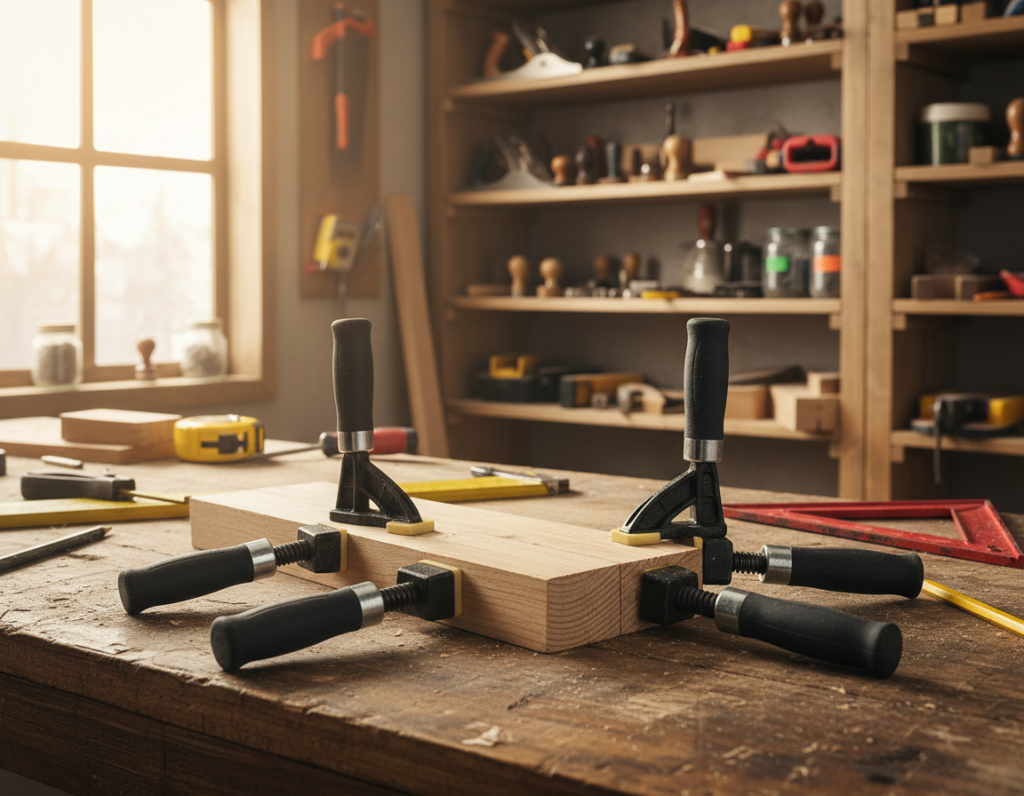
Corner clamps are very important among essential carpentry clamps. They’re great for tasks like building cabinets, picture frames, and more. These projects need precise angular joints. Top-rated carpentry clamps, including corner clamps, are durable and precise. They’re a good investment for serious carpenters.
For the best results, pick top rated carpentry clamps known for quality and performance. This way, your projects will have the highest precision and craftsmanship.
Band Clamps for Irregular Shapes
Band clamps are great for carpentry tasks with odd shapes. They fit many sizes and shapes, making them key for special projects.
They’re perfect for projects that regular clamps can’t hold. The flexible band tightens around the workpiece, spreading pressure evenly. This is great for items that need careful handling.
Band clamps apply even pressure on complex shapes. They’re great for gluing parts together or holding unique items in place.
For beginners, band clamps are a must-have. They’re part of a detailed guide on carpentry clamps. They help tackle many projects with ease.
Adding band clamps to your toolkit boosts your skills. They’re essential for complex furniture or unique decorations. They offer the support and flexibility needed.
Hand Screw Clamps for Delicate Work
Hand screw clamps are perfect for delicate carpentry tasks. They add finesse to your work. These clamps are great for sensitive materials that can get damaged easily.
They apply even pressure, which helps avoid marring or crushing. This is why they’re perfect for gluing veneer or making intricate furniture. Precision and care are key here.
Hand screw clamps are also adjustable. They fit various workpiece sizes and shapes. This means they hold securely without too much pressure. Their adjustability and gentle grip make them crucial for detailed projects.
- Adjustability: The ability to adjust the clamp to fit different sizes and shapes of workpieces is crucial.
- Material: Look for clamps made from durable materials that can withstand regular use.
- Ease of Use: Clamps that are easy to apply and remove can save time and reduce frustration.
Best Practices for Using Hand Screw Clamps
- Always inspect your clamps before use to ensure they are in good condition.
- Apply even pressure to avoid damaging your workpiece.
- Use the correct size clamp for your project to ensure a secure hold.
By adding hand screw clamps to your toolkit, you’ll do delicate carpentry tasks better. Follow these tips for precision and confidence.
Your Complete Carpentry Clamps Guide: How to Choose the Right Clamp
Understanding the different clamps is key to top-notch carpentry. There are many types of carpentry clamps, each for a specific task. Picking the right one is vital for your project’s success.
Project Requirements and Clamp Selection
When picking a carpentry clamp, think about your project’s needs. Different projects need different clamps. For example, band clamps are great for odd shapes, while hand screw clamps are best for delicate work.
Consider the material, the outcome you want, and how much pressure you need. Bar clamps are perfect for big surfaces because they apply even pressure. C-clamps are versatile and work for many tasks.
Looking at carpentry clamps reviews can help too. It shows what each clamp does well and what it doesn’t. This way, you can pick the best clamp for your project.
The right clamp can really make your carpentry work better and faster. By knowing what your project needs and the types of clamps out there, you can find the perfect tool.
Building Your Essential Clamp Collection
Building a good clamp collection is key for carpenters, whether you’re new or upgrading. The right clamps can improve your work’s quality and speed.
Beginners should start with the basics. Bar clamps and C-clamps are great for many tasks. They are essential for most carpentry jobs.
As you get better and tackle harder projects, add more clamps. Specialized clamps like corner, band, and hand screw clamps are great for specific tasks. They help make your work more precise and better.
Think about the projects you usually do when choosing clamps. A band clamp is good for odd shapes. Corner clamps are a must for perfect 90-degree joints.
- Start with basic, versatile clamps like bar clamps and C-clamps.
- Gradually add specialized clamps based on your project needs.
- Consider the specific requirements of your projects when selecting clamps.
Building your clamp collection thoughtfully prepares you for many carpentry tasks. You’ll work with confidence and precision.
Proper Clamp Usage and Safety Techniques
Learning how to use clamps is key for carpenters aiming for top results. Using clamps right ensures your work is quality and keeps you safe.
Choosing the right clamp for the job is vital. Bar clamps are great for big projects needing lots of pressure. C-clamps are versatile and work for many tasks.
Safety is a big deal when using clamps. Misusing them can cause injuries and damage. So, it’s important to use them safely.
Here are some safety tips for clamp use:
- Always check your clamps before using them to make sure they’re good to go.
- Use the right clamp for the job to avoid too much or too little pressure.
- Keep your workspace tidy to prevent accidents.
- Never leave clamps alone or overnight.
| Clamp Type | Common Use | Safety Precaution |
|---|---|---|
| Bar Clamps | Large projects needing lots of pressure | Make sure pressure is evenly spread |
| C-Clamps | Works for many tasks | Don’t over-tighten |
| Spring Clamps | For quick, temporary holds | Watch out for sudden releases |
Knowing how to use and safely handle different clamps can lower accident risks. It also boosts your work’s quality. Getting top-rated carpentry clamps is a smart move. They offer reliable performance and last long.
Maintaining and Storing Your Clamps
Keeping your carpentry clamps in good shape is key. It helps them last longer and work better. Taking care of them can stop damage and keep them in top condition.
First, clean your clamps often. Dirt, dust, and debris can harm their performance. Use a soft cloth and mild soap to clean them, focusing on the parts that move.
Next, lubricate the moving parts. A bit of silicone spray or oil on the pivot points and screws helps. It reduces friction and stops rust.
For storing, organize and protect your clamps. Use a special area or clamp rack to keep them handy. This saves space and protects your clamps.
- Store clamps in a dry place to avoid rust and corrosion.
- Keep them away from direct sunlight to prevent material damage.
- Use clamp holders or clips to keep them organized and safe from damage.
By following these tips, your carpentry clamps will last longer and work better. A well-cared-for clamp is a must-have for carpenters. With the right care, it will be a trusted tool in your workshop for many years.
Conclusion
Mastering carpentry needs the right tools, and clamps are key. This guide has covered the different types of clamps, like bar clamps and hand screw clamps. Knowing how to use each one is crucial for top-notch results.
When picking clamps, think about what your projects need and the quality of the clamps. Reading reviews can help find the best tools. Having the right clamps makes it easier to do many carpentry tasks.
By following this guide, carpenters can be ready for any project. Keep this guide handy to keep improving your skills and succeed in your work.