

Anúncios
Starting a new building project is exciting, but many homeowners get the terms mixed up. They often confuse cement, mortar, and concrete when talking about renovations. Knowing the differences between cement mortar and concrete is key to building things that last.
These materials have different roles in household tasks. One is like a glue, while another is the foundation of your home. Using the wrong one can lead to expensive mistakes in your outdoor projects.
This article will clear up the confusion between cement, mortar, and concrete. We’ll explore their strengths, drying times, and how to use them. You’ll learn which mix is best for your home needs. By the end, you’ll feel ready to tackle any masonry task like a pro.
Anúncios
What is Cement and Its Composition?
Cement is key in building, acting as the glue that holds structures together. It’s a binder that sets, hardens, and sticks to other materials. This makes it essential for construction.
Cement is made from limestone, clay, sand, and minerals. The mix can change based on the cement type.
Chemical Composition of Cement
The chemical makeup of cement is complex. It has compounds that help it bind. The main parts are:
Anúncios
- Tricalcium silicate (C3S)
- Dicalcium silicate (C2S)
- Tricalcium aluminate (C3A)
- Tetracalcium aluminoferrite (C4AF)
These compounds mix with water to form a hard paste. This paste holds the structure together. Knowing this is key to understanding how cement differs from mortar and concrete.
There are many types of cement, each with its own uses. Portland cement is the most common. It’s strong and durable, making it perfect for many projects.
It’s important to know about cement’s composition and types for building. By understanding its properties and uses, builders can make sure their structures last. This is vital when comparing cement, mortar, and concrete.
Understanding Mortar and Its Applications
Mortar is key in construction, holding buildings together. It’s made from cement, sand, and water, with sometimes extra additives. It fills gaps between bricks, stones, and other masonry.
The mix of mortar can change based on its use. Cement is the binder, sand adds bulk and strength, and water makes it the right consistency.
There are many types of mortar, like cement, lime, and epoxy. Each has its own uses and benefits.
Uses of Mortar in Construction
Mortar is used in many ways, like in bricklaying, plastering, and fixing old buildings. It’s great for sticking masonry together.
- Bricklaying and masonry work
- Plastering and rendering
- Repairing and restoring old structures
- Filling gaps and joints
Mortar also adds to a building’s look. You can change its color and texture to match or contrast with the masonry. This opens up many design options.
Knowing about different mortars and their uses helps builders and homeowners. They can make better choices for their projects. This ensures the buildings are strong, last long, and look good.
Exploring Concrete and Its Features
Concrete is a mix of cement, water, and aggregate. It’s a key part of the construction world. Its strength and flexibility make it great for many projects, from homes to big buildings.
Concrete is very strong and lasts a long time. It can handle different weather and can be made to have special qualities. For example, it can be strong, resist chemicals, or be easier to work with.
Properties of Concrete
The makeup of concrete affects its properties. Important ones include:
- Compressive strength
- Tensile strength
- Durability
- Workability
- Permeability
Knowing these properties helps pick the right concrete for a project. For example, strong concrete is used in heavy structures. Concrete that lasts longer is better for areas with bad weather or chemicals.
Comparing cement, mortar, and concrete shows their uses and benefits. Here’s a table that highlights their differences:
| Material | Primary Use | Key Properties |
|---|---|---|
| Cement | Binding agent | Adhesive properties, hardness |
| Mortar | Bricklaying, plastering | Workability, bonding strength |
| Concrete | Structural elements | Compressive strength, durability |
Using concrete in building has many benefits. It can be shaped in many ways and is very strong. New types of concrete are also more eco-friendly, making it even better.
Cement vs. Mortar vs. Concrete: Key Differences
To choose the right material for a project, it’s essential to grasp the differences between cement, mortar, and concrete.
Cement, mortar, and concrete are three fundamental components in construction. Each serves a unique purpose. Cement is a fine powder that acts as a binder. Mortar is a mixture that holds bricks or stones together. Concrete is a composite material used for building structures.
The primary difference between these materials lies in their composition and application. Cement is a key ingredient in both mortar and concrete. But it is not used independently as a building material due to its properties.
A comparative analysis of these materials can be summarized in the following table:
| Material | Composition | Primary Use |
|---|---|---|
| Cement | Limestone, clay, and other minerals | Binder in mortar and concrete |
| Mortar | Cement, sand, and water | Holding bricks or stones together |
| Concrete | Cement, sand, gravel, and water | Building structures, foundations |
Understanding these differences is key for selecting the right material for a construction project. It ensures the project’s durability and success.
The Role of Cement in Mortar and Concrete
Knowing how cement works is key to seeing its impact on mortar and concrete. Cement is what holds these materials together.
In both mortar and concrete, cement’s main job is to stick the parts together. In mortar, it holds sand particles. In concrete, it sticks sand, gravel, or crushed stone together. The mix of cement and other materials is very important for the final product’s quality.
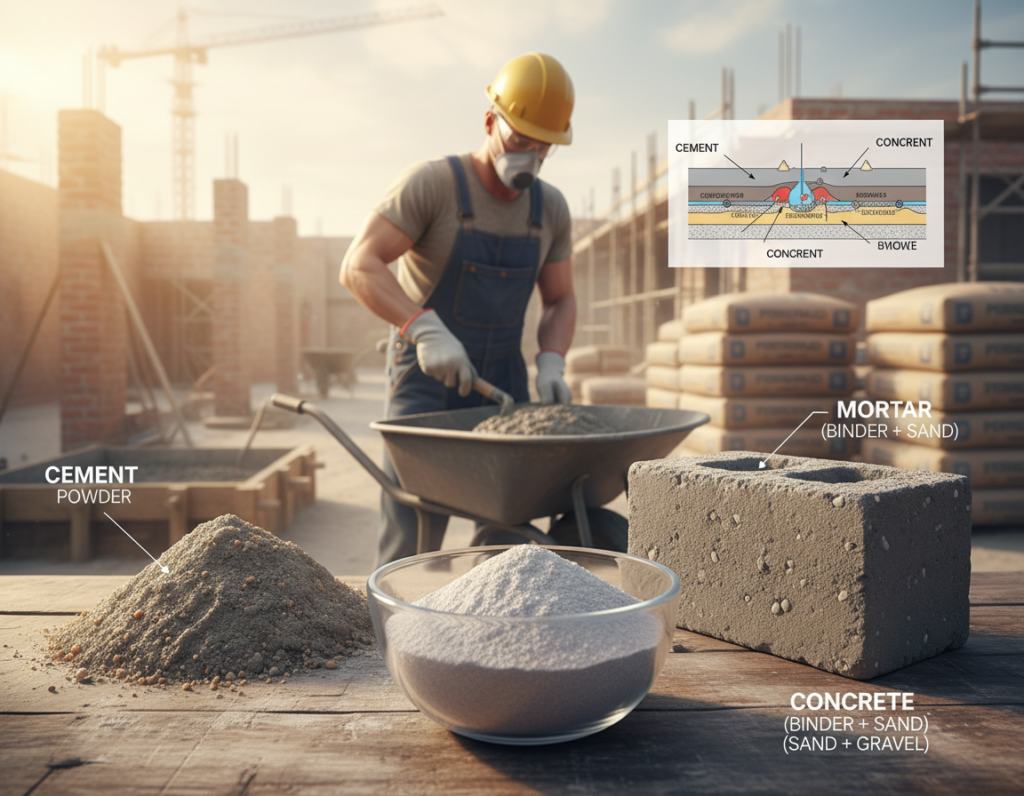
The amount of cement used affects how strong and durable the final product is. More cement means stronger and more durable materials. But, it can also make things more expensive and cause shrinkage if not managed right. Both mortar and concrete have their own strengths and uses.
Understanding cement’s role helps builders and DIY fans make better choices. They can ensure their projects are strong and last long.
Comparing Strength and Durability
The way cement, mortar, and concrete are made and cured affects their strength and durability. Knowing these differences is key to picking the right material for a project.
Cement is a fine powder that binds concrete and mortar together. But, its strength changes when mixed with other materials to form mortar or concrete.
Factors Affecting Strength and Durability
Many things can change how strong and durable these materials are. These include:
- The mix of cement with other materials (like aggregates and water)
- How it’s cured, like the temperature and humidity
- Any additives or admixtures used
Comparative Strength and Durability
It’s important to look at the strength and durability of cement, mortar, and concrete. We need to think about their uses and how much stress they can handle.
Cement is strong under pressure but can crack easily. Mortar, made of cement, sand, and water, is less strong but more flexible. It can move a bit without cracking.
Concrete, with cement, sand, gravel or stone, and water, is very strong and durable. It’s great for building foundations, walls, and beams.
| Material | Compressive Strength | Flexural Strength | Durability |
|---|---|---|---|
| Cement | High | Low | Low (prone to cracking) |
| Mortar | Medium | Medium | Medium (more flexible than cement) |
| Concrete | High | Medium to High | High (durable with proper curing) |
Understanding the strength and durability of cement, mortar, and concrete helps builders and engineers choose the best material for a project.
Common Misconceptions about Cement, Mortar, and Concrete
The construction world is full of wrong ideas about cement, mortar, and concrete. These misunderstandings can lead to choosing the wrong materials.
Many think cement, mortar, and concrete are the same. But they are not. Cement is a fine powder used to bind things together. Mortar is a mix of cement, sand, and water for bonding masonry. Concrete is a mix of cement, water, and aggregate for building structures.
Another big mistake is thinking concrete’s strength only depends on cement. But, the mix of cement and water, the type of aggregate, and how it’s cured also matter a lot.
| Material | Composition | Primary Use |
|---|---|---|
| Cement | Fine powder of limestone, clay, and other minerals | Binder in mortar and concrete |
| Mortar | Cement, sand, and water | Bonding masonry units |
| Concrete | Cement, water, and aggregate (sand, gravel, or crushed stone) | Structural elements (foundations, walls, etc.) |
Knowing the differences is key for picking the right material. It ensures projects last and saves money from mistakes.
1: All Are the Same
Many homeowners get confused about building supplies. They think different names mean the same thing. This mistake can cause big problems during renovations or repairs.
Each material has its own job in building. It’s key to know the differences between cement mortar and concrete. One is a main ingredient, and the others are finished mixes with certain textures.
The uses of cement mortar and concrete vary. You might need one for holding bricks together and the other for a solid floor. Using the wrong one can lead to cracks or even a collapse. Experts choose materials based on the project’s weight and pressure.
Don’t think these options are the same just because they look similar in a bag. Understanding how they bond and harden is important. Picking the right material means your work will last for years.
2: Mortar is Just Thicker Concrete
Many homeowners think cement and mortar are the same. They believe the only difference is how much water is used. This misunderstanding can cause big problems during home repairs or small changes.
Looking at the cement vs mortar composition clears up the confusion. Cement uses heavy gravel and stones for strong support. It’s perfect for sidewalks or foundations that need to stay solid under pressure.
A cement mortar concrete comparison shows mortar doesn’t have big rocks. Instead, it has fine sand for a flexible bond between masonry units. This lets bricks move slightly with temperature changes without breaking.
Using the wrong product can make joints weak or paths crumble. The thickness doesn’t change the mix’s core properties. Always pick the right mix for your project to keep it safe.
Best Practices for Using Cement, Mortar, and Concrete
To get the best results in construction, knowing how to use cement, mortar, and concrete is key. These materials are essential in building, and using them right can make a big difference. It affects how strong and lasting a project will be.
Working with these materials means following certain rules. It’s important to know the best ways to mix, apply, and cure them. This ensures they work well together.
Best Practices for Mixing Mortar
Mixing mortar right is critical for its success in building projects. Here are some important tips:
- Use the correct ratio of cement to sand as specified for the particular application.
- Ensure the mixing water is clean and free from contaminants.
- Mix the mortar to the right consistency, avoiding both too dry and too wet mixes.
When mortar is mixed correctly, it sticks better to masonry. This makes the whole structure stronger and more durable.
Applying and curing mortar is also key. Doing it right prevents problems like cracks and uneven surfaces.
By sticking to the best practices for cement, mortar, and concrete, projects get better. They become stronger, more durable, and look better. This improves the project’s quality and value over time.
Conclusion: Choosing the Right Material for Your Project
Knowing the differences between cement, mortar, and concrete is key for any project. Builders and DIY fans can make better choices. This ensures their work lasts and looks great.
Cement, mortar, and concrete each have their own jobs in building. Cement binds things together, mortar holds bricks or stones, and concrete makes structures strong. Picking the right one is important for a project’s success.
These materials are used in many ways, like building foundations and walls, or making decorative pieces. Choosing the right one helps get professional results and makes projects last longer.
Getting a project right means knowing what cement, mortar, and concrete can do. With this knowledge, you can pick the best material. This ensures your work is strong and lasts a long time.