

Anúncios
Working with heavy machinery needs a lot of focus and care. Whether you’re a weekend DIY fan or a pro contractor, safety is key. Every year, many in the U.S. get hurt because they ignore basic safety steps.
Following set workshop rules keeps your area safe from dangers. These steps avoid painful accidents and make your tools last longer. Knowing how to handle sharp blades or fast drills makes projects safer.
We’ll look at the best ways to protect yourself and others. This guide covers the right clothes, area care, and how to store your tools. You’ll learn to spot risks before they cause serious problems.
Anúncios
Following these clear rules makes your workshop safe and productive. Let’s explore the key safety protocols for a safe and smooth build.
Key Takeaways:
- Proper protective equipment prevents most workshop injuries.
- Maintaining an organized workspace reduces operational risks.
Understanding the Importance of Power Tool Safety
Knowing how to use power tools safely is key to avoiding accidents at work. These tools are very useful but can be dangerous if not used right.
Anúncios
Power tool safety is very important. Using these tools wrong can lead to serious injuries like cuts, amputations, and even death. So, it’s vital to follow safety tips and precautions to lower these risks.
Important parts of power tool safety include getting proper training, keeping tools in good shape, and wearing personal protective equipment (PPE). By doing these things, people can greatly cut down the chance of accidents.
| Safety Measure | Description | Benefit |
|---|---|---|
| Proper Training | Ensures users understand how to operate tools correctly | Reduces risk of accidents due to misuse |
| Regular Maintenance | Keeps tools in good working condition | Prevents tool failure during operation |
| Personal Protective Equipment (PPE) | Protects users from potential hazards | Minimizes injury severity in case of an accident |
By understanding and using these safety measures, we can make our workplaces safer.
Essential Personal Protective Equipment for Power Tool Use
When using power tools, wearing the right gear is key to avoiding injuries. The right personal protective equipment (PPE) helps reduce risks. It’s all about keeping safe while working with tools.
There are various PPEs for different hazards. Safety glasses and face shields protect your eyes and face from debris. Make sure your safety glasses meet ANSI Z87.1 standards.
Safety Glasses vs. Face Shields
Safety glasses are great for eye protection. But face shields offer more face protection. Choose based on the task and risk level.
Impact-Rated Lens Standards
Impact-rated lenses mean your safety glasses can handle fast impacts. Always look for lenses that meet or exceed ANSI Z87.1 standards.
| PPE Type | Protection Offered | Standards to Look For |
|---|---|---|
| Safety Glasses | Eye protection from debris | ANSI Z87.1 |
| Face Shields | Face and eye protection | ANSI Z87.1 |
| Earplugs/Earmuffs | Hearing protection | Noise Reduction Rating (NRR) |
Earplugs and earmuffs are crucial for hearing safety. Pick ear protection with the right Noise Reduction Rating (NRR) for your task.
Cut-Resistant Gloves for Specific Applications
Cut-resistant gloves are for tasks with cutting tools. They prevent cuts and lacerations.
Avoiding Loose Clothing and Jewelry
Loose clothes and jewelry can get caught in tools, leading to accidents. Always avoid them when using power tools.
Knowing about different PPE and their uses can greatly lower injury risks with power tools. Power tool safety equipment is a vital part of staying safe.
Preparing Your Workspace for Safe Power Tool Operation
A clean and stable workspace is key for safe power tool use. It’s important to keep your area organized and free from dangers to avoid accidents.
Using clamps and vises is crucial for holding your workpiece in place. This makes your work safer and more precise.
Using Clamps and Vises
Make sure the clamps and vises you use fit the job and are tightly attached to the work surface. This stops your workpiece from moving or flying off while you work.
Stable Work Surface Requirements
A solid work surface is essential for safe power tool use. It should be strong, even, and free from clutter.
To set up a safe workspace, follow this checklist:
| Workspace Aspect | Safety Requirement | Benefit |
|---|---|---|
| Clutter | Clear workspace of unnecessary items | Reduces tripping hazards and distractions |
| Work Surface | Ensure it is sturdy and level | Prevents accidents from uneven or weak surfaces |
| Lighting | Adequate lighting for the task | Improves visibility and reduces eye strain |
By following these tips and keeping your workspace tidy, you lower the chance of accidents with power tools.
Conducting Pre-Operation Tool Inspections
Checking your tools before you use them is key to a safe work area. These inspections spot dangers and stop accidents.
When you inspect tools, look for wear and damage. Check for frayed cords, broken handles, and worn parts. These signs mean a tool is not safe anymore.
Signs of Wear and Damage
Some common signs of wear and damage include:
- Frayed or damaged cords
- Cracked or broken handles
- Worn-out or loose parts
Proper Installation and Tightness
Make sure all parts are right and tight. Loose parts can make tools fail, causing accidents.
Here’s a summary of key inspection points:
| Inspection Point | What to Check | Action if Faulty |
|---|---|---|
| Cords and Cables | Fraying, cuts, or damage | Replace if damaged |
| Handles and Grips | Cracks, breaks, or wear | Replace if damaged |
| Parts and Accessories | Looseness, wear, or damage | Tighten or replace as needed |
Regular tool checks can greatly lower accident risks. This makes your work area safer.
Core Power Tool Safety Rules During Operation
To keep a safe work area, following key power tool safety rules is crucial. Power tools are great for getting work done fast, but they can be dangerous if not used right. It’s important to know and follow safety rules to avoid accidents.
Keeping control and being aware of your surroundings is key. Hold the tool tightly, watch your area, and make sure it’s free from clutter and things that could trip you up.
Understanding Guard Functions, When to Replace Damaged Guards
Guards on power tools are there to keep you safe from harm. It’s important to know how they work and to check if they’re in good shape.
Guards help by stopping flying particles, keeping you away from sharp parts, and preventing getting caught. Always use tools with guards on and replace any that are broken or missing before you start.
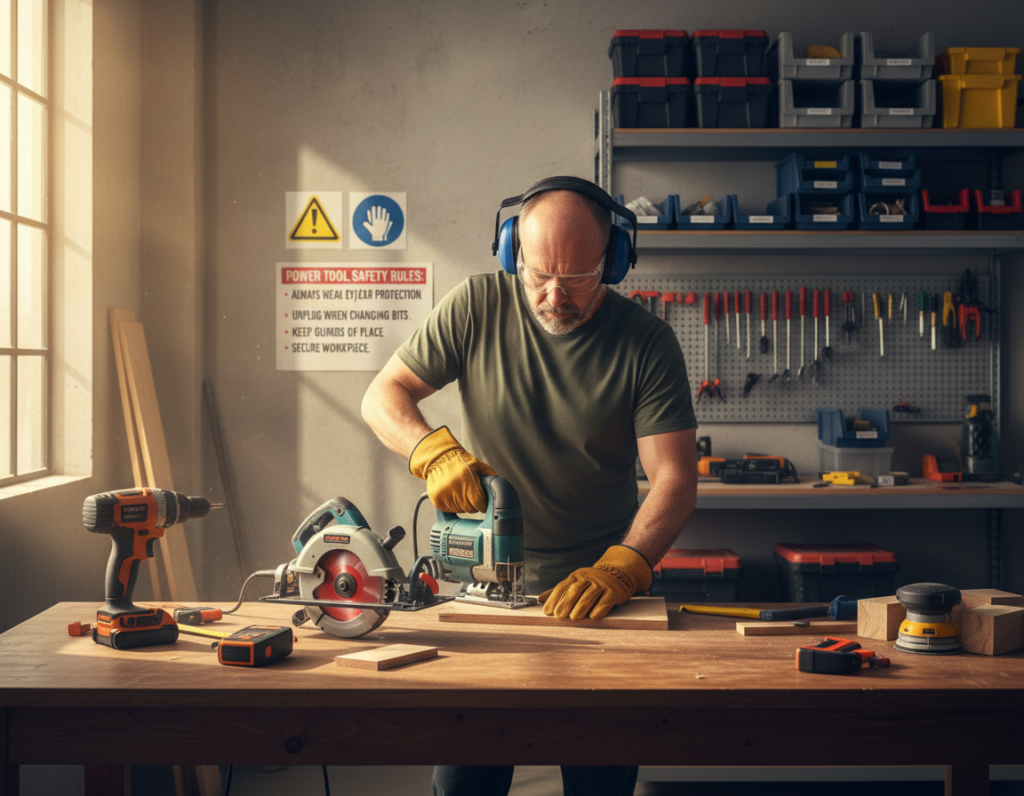
| Guard Type | Function | Replacement Criteria |
|---|---|---|
| Blade Guard | Protects against contact with the blade | Replace if cracked, broken, or missing |
| Dust Guard | Reduces dust and debris emission | Replace if damaged or clogged |
| Splinter Guard | Prevents splinters and kickback | Replace if worn or damaged |
Checking guards and other safety parts often is important for safety. By knowing what guards do and following safety rules, you can lower the chance of getting hurt with power tools.
Safety Guidelines for Cutting and Sawing Tools
Working with cutting and sawing tools requires following important safety rules. These rules help prevent accidents and keep the work area safe.
Cutting and sawing tools are very common in many industries and DIY projects. It’s key to use them safely to avoid injuries and keep work flowing smoothly.
Blade Guard Operation
The blade guard is a vital safety feature of these tools. It keeps the user safe from the blade when the tool is running.
- Make sure the blade guard is on and working right before you start the tool.
- Check the blade guard often for any damage or issues.
Preventing Kickback
Kickback happens when the tool reacts to the material being cut, which can lead to losing control. To stop kickback:
- Choose the right blade for the material you’re cutting.
- Hold the tool tightly and stand steady.
Proper Fence and Guide Use
Fences and guides help make cuts accurate and prevent accidents.
- Follow the maker’s instructions for using fences and guides.
- Make sure they are locked in place before cutting.
Push Stick and Push Block Techniques
Push sticks and blocks are key for keeping hands away from the blade.
- Use push sticks or blocks for cutting small pieces.
- Always keep your hands away from the blade.
By sticking to these safety tips, users can greatly lower the chance of accidents with cutting and sawing tools.
Safety Procedures for Drilling and Fastening Tools
To avoid common hazards, it’s crucial to follow safety guidelines and best practices. Drilling and fastening tools are used in many industries and DIY projects. Their safe use is key to preventing accidents.
Preventing Bit Binding and Tool Grabbing
Bit binding happens when the drill bit gets stuck, causing the tool to twist or grab. This can lead to loss of control or injury. To prevent this, use the right drill bit for the material and hold the tool firmly with both hands.
Torque Settings and Clutch Adjustments
It’s important to understand and adjust the torque settings and clutch on your tool. This prevents over-tightening or stripping screws. It also protects the tool and workpiece and reduces injury risk from sudden kickback.
The type of trigger on a power tool affects its safety and usability. Sequential triggers require the tool to press against the workpiece before starting. Contact trip triggers start as soon as they touch a surface. Knowing the difference and choosing the right trigger can improve safety.
Air Compressor Safety Precautions
For pneumatic tools, the air compressor is key. Regularly check hoses for damage and maintain the compressor. Follow the manufacturer’s guidelines for pressure to prevent accidents from compressed air.
By following these safety procedures, users can greatly reduce injury risk. They also improve work efficiency and quality.
Electrical Safety Precautions and Best Practices
Keeping electrical safety in mind is key when using power tools. It helps avoid electrical shock or fire. Power tool safety standards stress the need for electrical safety to prevent accidents and keep the work area safe.
Choosing the right cord gauge for your tool is crucial. A cord that’s too thin or too long can cause voltage drops and overheating. This might lead to a fire. Make sure the cord gauge fits your tool’s needs for safe and efficient use.
Gauge Requirements for Different Tools
- For low-power tools, a 16-gauge cord is often sufficient for lengths up to 50 feet.
- For medium-power tools, a 14-gauge cord is recommended for lengths up to 50 feet.
- For high-power tools, a 12-gauge cord is recommended, especially for longer lengths.
Outdoor-Rated Cord Specifications
When working outside, use cords rated for outdoor use. These cords can handle weather conditions and are marked with a “W” or “Weather-Resistant” label.
Other safety tips include checking cords for damage often and not overloading circuits. Also, keep cords away from heat and flammable materials. By following these tips, you can lower the risk of electrical accidents.
Always follow the manufacturer’s instructions for your power tool and cord. This includes any safety precautions and guidelines for maintenance and inspection.
Battery-Powered Tool Safety Measures and Guidelines
Battery-powered tools are handy and easy to carry. But, they need special care to use safely. Knowing and following important safety steps is key.
Keeping tools and batteries away from metal is a big safety rule. This stops short circuits and damage. Always check the tool and battery for any damage signs.
Avoiding Short Circuits and Damage
Handling batteries with care is crucial. Don’t let them get too hot or cold. This prevents internal shorts.
Using Manufacturer-Approved Chargers
Only use chargers made by the tool’s maker. These chargers are safe for the battery type. They prevent overcharging and fires.
Charging batteries in the right temperature is important. Extreme temps can harm performance and safety. Charge in a cool, well-ventilated spot.
By sticking to these tips, users can lower risks with battery tools. This makes work safer for everyone.
Tool Maintenance and Safe Storage Procedures
Keeping tools in good shape and storing them safely is key to avoiding accidents. Regular upkeep means turning off power before making any changes. It also means using the right tools for the job.
Best Practices for Tool Storage
Tools should be kept in dry, safe spots to avoid damage and misuse. Lockout procedures in the workplace add an extra layer of safety. They stop tools from being used by accident.
Having manuals for each tool handy is crucial. They help you follow safety rules and maintenance tips. Training from OSHA and tool makers teaches users how to use tools safely.
Ongoing Safety Education
Staying up-to-date with safety rules and practices is important. By focusing on tool care, safe storage, and training, you can lower the chance of accidents. This makes the workplace safer for everyone.
FAQ
Why are fundamental power tool safety rules so critical for both DIYers and professionals?
Following power tool safety rules is key to avoiding injuries. These rules help prevent deep cuts, electrical shocks, and eye damage. By sticking to OSHA guidelines, users protect themselves and others from the dangers of fast-moving machines and mechanical failures.
What impact-rated lens standards should I look for in my personal protective equipment?
Look for safety glasses that meet the ANSI Z87.1 standard for impact resistance. For tasks with lots of debris, like grinding, wear a face shield over your safety glasses. This gives you full protection from flying objects.
What are the most effective power tool safety tips for organizing a workspace?
A safe workspace is clean and stable. Use heavy-duty clamps or vises, like those from Wilton, to keep your workpiece steady. This stops the tool from moving or the material from shifting while you work.
Which power tool safety precautions should be taken during a pre-operation inspection?
Check for wear signs like frayed cords or cracked casings. Make sure all parts, like blades or drill bits, are installed right. Never use a tool that’s damaged.
What power tool safety measures are necessary regarding tool guards?
Safety guards protect you from debris and moving parts. Never remove or block a guard. If a guard on a tool like a Makita miter saw is broken, don’t use the tool until the guard is fixed.
What are the recommended power tool safety guidelines for preventing kickback during cutting tasks?
Use a riving knife and align the fence on a table saw to prevent kickback. Always use push sticks and blocks to keep your hands away from the blade. This ensures the material cuts smoothly without getting stuck.
Which power tool safety procedures help manage torque and prevent bit binding?
Adjust the clutch settings on high-torque drills, like a Milwaukee M18 Fuel, to match the material’s resistance. This stops the tool from twisting your wrist if the bit gets stuck. Always hold heavy-duty tools with both hands to keep control.
How do electrical requirements affect power tool safety standards in a workshop?
The wrong extension cord can cause overheating and damage. Use a cord that matches the tool’s amperage. For outdoor work, use cords made for outdoor use to avoid electrical hazards from moisture.
What safety steps are unique to battery-powered cordless tools?
Use only approved chargers from brands like Ryobi or Ridgid for cordless tools. Avoid charging in extreme temperatures and check battery terminals for debris. This prevents short circuits and overheating or fires.
Where can professionals find formal power tool safety training and certification?
OSHA-authorized programs or manufacturer-specific resources, like Milwaukee’s Jobsite Safety Solutions (JSS), offer training. Ongoing education keeps your team up-to-date with safety rules and the latest tool technologies.