

Anúncios
Fast machinery makes work go quicker, but safety comes first. Pneumatic drivers shoot metal pins fast, beating manual methods. Yet, ignoring safety rules can be deadly.
Key Takeaways:
- Proper training prevents injuries.
- Specialized gear remains mandatory.
Nail gun safety is key to avoiding common injuries. Skipping training can lead to serious accidents. Everyone using a nail gun must learn the right way to handle it.
Anúncios
Good safety precautions keep work areas safe. This guide teaches how to use a nail gun safely. Knowing how triggers and mechanisms work is crucial for safety.
Wearing protective gear like goggles or gloves is essential. Modern nail guns have features to prevent accidents. You’ll find tips on maintenance and storage in the next sections.
Choosing the right fasteners is as important as wearing safety gear. These tools need steady hands and focus all day. Following expert advice in this guide is key to success.
Anúncios
Understanding Nail Gun Types and Their Applications
To use a nail gun well and safely, knowing the different types and their uses is key.
Nail guns, or nailers, are sorted by their tasks, power sources, and nail types.
The main types are framing nailers, finish nailers, and roofing nailers. Each is made for a specific job.
- Framing Nailers: These are for big jobs like building walls and decks. They use big nails and are usually pneumatic.
- Finish Nailers: For trim work and making furniture, these nailers use thin nails. They’re good for detailed work.
- Roofing Nailers: Made for roofing, these nailers quickly nail shingles and roofing felt into place.
Knowing how to use each nail gun safely is very important.
| Nail Gun Type | Application | Safety Consideration |
|---|---|---|
| Framing Nailers | Heavy-duty framing | Watch for kickback and nail penetration through materials |
| Finish Nailers | Trim work and finish carpentry | Be cautious of nail placement to avoid splitting wood |
| Roofing Nailers | Roofing applications | Ensure proper footing on roofs and watch for falling objects |
Knowing about nail gun types and their uses helps avoid accidents. It also makes work better.
Essential Safety Equipment for Nail Gun Operation
Using a nail gun safely needs more than just knowing how to use it. You also need the right safety gear. Personal protective equipment (PPE) is key to keeping you safe from nail gun dangers.
Safety Glasses
Safety glasses are a must-have when using a nail gun. They keep your eyes safe from flying nails or wood splinters. Look for glasses with polycarbonate or Trivex lenses for the best protection.
Hearing Protection
Nail guns are very loud and can hurt your hearing if you don’t protect it. Earplugs or earmuffs can help keep the noise down. Make sure to pick hearing protection that fits the nail gun’s noise level.
Steel-Toed Boots
Steel-toed boots are important for protecting your toes from heavy objects. They also stop sharp objects from piercing your feet. Wearing them can prevent serious foot injuries when using nail guns.
| Safety Equipment | Purpose | Benefits |
|---|---|---|
| Safety Glasses | Protect eyes from flying debris | Prevents eye injuries, reduces risk of vision loss |
| Hearing Protection | Reduce noise level to safe range | Prevents hearing damage, reduces risk of tinnitus |
| Steel-Toed Boots | Protect toes from heavy objects and punctures | Prevents foot injuries, reduces risk of disability |
In conclusion, the right safety gear is crucial for safe nail gun use. Wearing safety glasses, hearing protection, and steel-toed boots can greatly lower your injury risk.
Pre-Operation Safety Inspections
Doing a thorough safety check before using a nail gun is key. It helps make sure the tool works right. You need to look for any damage or wear that might affect its use.
Inspecting the Nail Gun for Damage or Wear
Before you start, check the nail gun for any damage or wear. Look at:
- The body and handle for cracks or breaks
- The trigger to make sure it works right
- The magazine and nails for damage or jams
- The cord or hose for wear or damage, if it has one
If you find any damage or wear, fix it before using the nail gun. This might mean repairing or replacing parts.
Regular safety checks are important. They help prevent accidents and make the nail gun last longer. Finding and fixing problems early can save you from bigger issues later.
Here’s a checklist to help with your safety checks:
- Make sure all safety features work right.
- Check for software or firmware updates, if your nail gun has them.
- Make sure the nail gun is well-lubricated, as the maker suggests.
- Test the nail gun in a safe place before you start your work.
Setting Up Your Workspace Safely
To avoid risks with nail guns, setting up a safe workspace is key. A safe workspace boosts safety and work efficiency.
Clearing the Area
Clearing your workspace is critical. Remove any clutter, debris, or obstacles that could get in the way or cause accidents.
- Remove any unnecessary tools or materials from the workspace.
- Ensure the floor is clear of debris and tripping hazards.
- Keep the workspace well-organized to prevent accidents.
Securing the Workpiece
Securing the workpiece is crucial to prevent it from moving during nail gun use. This could cause accidents or injuries.
- Use clamps or other holding devices to secure the workpiece.
- Ensure the workpiece is stable and will not shift during operation.
Ensuring Good Lighting
Good lighting is key for safe and accurate nail gun use. Poor lighting can lead to mistakes and accidents.
- Ensure the workspace is well-lit, either naturally or through the use of appropriate lighting fixtures.
- Position lighting to minimize shadows and glare.
By following these guidelines, you can greatly reduce accident risks. This ensures a safe and efficient work environment when using a nail gun.
How to Use a Nail Gun: Step-by-Step Operating Instructions
Learning to use a nail gun is key for both pros and DIY fans. It keeps you safe and efficient. First, get to know the parts and how they work.
A nail gun has a magazine, firing mechanism, and safety tip. Knowing these parts is vital for safe use.
Properly Loading Nails into the Magazine
Putting nails in the magazine is a big step. It needs careful attention. Here’s how to do it right:
- Make sure the nail gun is not connected to power or air.
- Open the magazine as the maker says.
- Put the nails in the magazine, making sure they line up.
- Close the magazine tight to keep nails in place while using.
After loading nails, check the gun’s alignment. Also, make sure it’s connected to power or air.
| Step | Description | Importance Level |
|---|---|---|
| 1 | Disconnect from power source | High |
| 2 | Open the magazine | High |
| 3 | Load nails correctly | High |
| 4 | Close the magazine securely | High |
Hold the nail gun with both hands. Your dominant hand should be on the handle. Your other hand should support the gun. Stand stable and keep your body ready for recoil.
To fire, press the safety tip against the surface and squeeze the trigger. Always control the nail gun and avoid accidental shots.
By following these steps and knowing how to load and handle a nail gun, you can lower accident risks. You’ll also work more efficiently.
Proper Nail Gun Handling Techniques
Learning how to handle a nail gun safely is key. It helps avoid accidents and keeps you safe while working. Using it right means less chance of getting hurt.
To use a nail gun right, know its weight and how it feels in your hands. Most are made to hold with both hands. One hand should be on the handle, and the other on the body of the gun.
Maintaining Control and Balance
It’s important to keep control and balance when using a nail gun. Stand with your feet apart and keep your body steady.
Here are some tips for staying in control and balanced:
- Hold the gun with your dominant hand and the other hand supporting it.
- Stand with your feet shoulder-width apart for balance.
- Avoid stretching or reaching too far, as it can make you lose balance.
- Keep the gun at a height that doesn’t strain your back or arms.
A comparison of proper and improper handling techniques is shown in the table below:
| Handling Technique | Proper Method | Improper Method |
|---|---|---|
| Holding the Nail Gun | Both hands, one on the handle and one supporting the body | One hand or improper grip |
| Standing Position | Feet shoulder-width apart | Feet together or too far apart |
| Body Balance | Evenly balanced | Off balance or leaning |
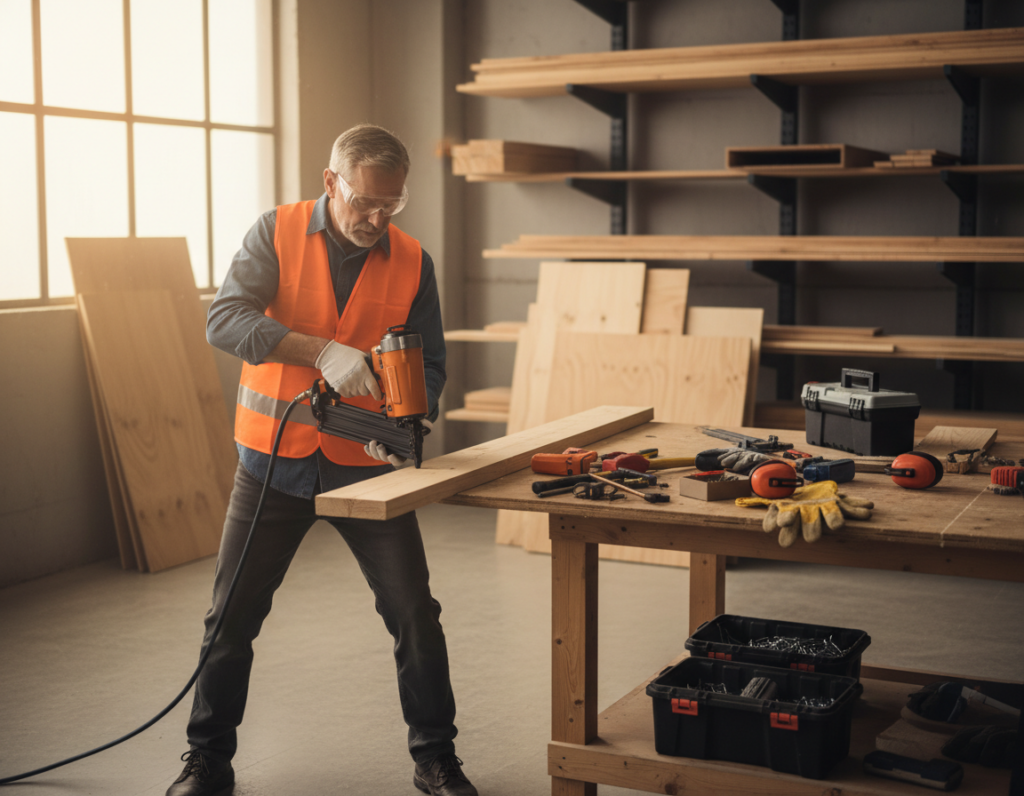
By following these tips, you can greatly reduce the risk of accidents. This ensures a safer work environment for everyone.
Critical Safety Rules to Follow During Operation
Using a nail gun safely means following key safety rules. These rules help avoid accidents and keep your work smooth. Always be aware of your area and stick to safety guidelines to lower risks.
Keeping Fingers Away from the Trigger
One important rule is to keep your fingers off the trigger until you’re ready to shoot. This simple step can stop accidental firings and injuries.
Avoiding Overreaching
Reaching too far can cause you to lose control of the nail gun. This increases accident risks. It’s important to stand steady and not stretch too much while using the nail gun.
Maintaining a Safe Distance
Keeping others at a safe distance is crucial when using a nail gun. Make sure people nearby are far enough away to avoid getting hurt.
Here are some key safety distances and practices to follow:
| Safety Practice | Description | Recommended Distance |
|---|---|---|
| Operator to Bystander | Minimum distance between the operator and bystanders | At least 10 feet |
| Nail Gun to Work Surface | Safe distance to maintain control and avoid kickback | Keep the nail gun firmly against the work surface |
| Finger to Trigger | Precaution to avoid accidental discharge | Keep fingers away until ready to fire |
By sticking to these safety rules and staying alert, you can greatly lower accident risks when using a nail gun.
Common Nail Gun Mistakes and How to Avoid Them
Using a nail gun safely is more than just following instructions. It’s about knowing the common mistakes. Being aware of these can greatly reduce accident risks and keep your work area safe.
Safe nail gun use means avoiding common errors. This includes knowing how to load it right, making sure nails are aligned, and doing safety checks.
Incorrect Loading
Incorrect loading is a big mistake that can cause problems. Always check the manual for loading instructions. Make sure the nails fit the nail gun correctly.
- Check the nail gun’s magazine for any debris or obstructions before loading.
- Use the correct angle and technique when loading nails to prevent jamming.
- Ensure the nail gun is properly cocked and ready for use according to the manufacturer’s guidelines.
Misaligned nails can cause jams or firing issues. To avoid this, make sure nails are aligned in the magazine.
- Regularly inspect the nail gun’s magazine for any signs of wear or damage that could cause nails to misalign.
- Use high-quality nails that are less likely to bend or deform during loading.
- Keep the nail gun’s magazine clean and free of debris to ensure smooth nail feeding.
Inadequate Safety Checks
Not doing enough safety checks before and during use can lead to accidents. It’s important to do thorough checks to make sure the nail gun works well.
- Always inspect the nail gun before use for any signs of damage or wear.
- Check that all safety features are functioning correctly.
- Ensure that you are wearing the appropriate personal protective equipment (PPE) as recommended by the manufacturer and safety guidelines.
By knowing and avoiding these mistakes, users can improve safety for themselves and others. Regular training and following safety rules are crucial to avoid accidents.
Troubleshooting Common Nail Gun Problems
Fixing common nail gun issues is key to keeping work smooth and safe. Nail guns are powerful tools. If they break down, it can cause accidents or slow down work.
Knowing why these problems happen is the first step to fixing them. Issues like jamming, misfiring, and not driving nails right are common.
Jamming, Misfiring, and Failure to Drive Nails Properly
Jamming happens when a nail gets stuck in the gun. This is often because of the wrong nail size or debris inside. Misfiring occurs when the gun can’t fire a nail, maybe because of a jam or a faulty firing mechanism. If the gun can’t drive nails right, it might be because of bad air pressure or worn parts.
To fix these problems, first check if the nail fits your gun. Clean the gun often to avoid jams. For misfiring, look at the firing mechanism for blockages or wear. Adjusting the air pressure as the maker suggests can help with driving nails.
- For jamming, make sure the gun is off from air before trying to clear it.
- To stop misfiring, check and keep the firing mechanism in good shape.
- Adjust the air pressure as the maker advises to avoid issues with driving nails.
By following these steps, you can cut down on downtime. This ensures your nail gun works well and safely.
Maintenance and Cleaning for Safe Operation
A well-maintained nail gun is safe to use. Regular care extends its life and keeps it working well. Without upkeep, accidents and poor performance can happen.
To keep your nail gun safe, focus on three main tasks: clean it, lubricate parts, and check for wear.
Cleaning the Nail Gun
Cleaning your nail gun often is key. It removes dirt and residue that can harm its performance. Use a soft brush or cloth for the outside and compressed air for the inside. Always follow the maker’s cleaning tips.
Lubricating Moving Parts
Lubrication is vital for your nail gun’s smooth operation. Add a few drops of oil to the moving parts as the maker suggests. This cuts down on friction and prevents early wear.
Regularly check your nail gun for wear. Look for damage on the driver blade, piston, and O-rings. Replace any damaged parts as the maker advises to keep it safe and working well.
By doing these maintenance steps, your nail gun will stay in top shape. This reduces accident risks and extends its life.
Storing Your Nail Gun Properly and Securely
Storing your nail gun right is key to avoiding accidents and keeping it working well. The right storage keeps the tool in top shape and safe to use.
Storing in a Dry Place
It’s crucial to keep your nail gun dry to avoid rust and corrosion. Moisture can harm the inside parts, causing it to break down.
- Stay away from humid spots like basements or sheds without good air flow.
- Wipe the nail gun dry with a cloth before putting it away, getting rid of dirt or moisture.
- Store it in a place with a steady temperature and low humidity.
Securing the Nail Gun
It’s important to keep your nail gun safe from unauthorized use. Here’s how:
- Use a lockbox or a secure cabinet for storage when not in use.
- Keep the nail gun out of sight to stop others from using it.
- Make sure the storage spot is hard for others to get to.
Keeping it Out of Reach of Children
It’s vital to keep the nail gun where kids can’t get to it. Here’s how:
- Store it in a high cabinet or on a high shelf.
- Use a locked container that kids can’t open.
- Teach kids about the dangers of nail guns and why they shouldn’t touch them.
By following these tips, you can make sure your nail gun is stored safely and securely. This reduces the chance of accidents and keeps it working well.
Conclusion
Using a nail gun safely is key to avoiding accidents and getting a job done right. We’ve talked about important safety tips, like knowing your nail gun and how to handle it. We also covered keeping it in good shape.
A quick safety check before you start, a clean workspace, and following safety rules are musts. These steps help lower the chance of getting hurt.
Keeping your nail gun in top condition and storing it safely are also important. Cleaning it often and storing it right can stop problems and keep it out of the wrong hands.
With the tips from this article, you can work safely and do a great job. Always remember, safety is the first step to a successful project.
FAQ
What are the primary differences between a framing nailer and a finish nailer?
A framing nailer, like the DeWalt 20V Max, is for heavy tasks like building decks or framing houses. It uses bigger nails. On the other hand, a finish nailer is for finer work like trim and molding. It needs smaller nails for a clean look.
Choosing the right tool for the job is key for quality work and safety.
Which personal protective equipment (PPE) is mandatory according to OSHA standards?
When using tools like Milwaukee or Makita, OSHA says you must wear safety glasses that meet ANSI Z87.1 standards. Also, hearing protection is a must because these tools can be very loud. Steel-toed boots help protect your feet from accidents or falling objects.
What is the difference between sequential and contact trip (bump fire) triggers?
A sequential trigger needs you to press the gun’s nose before pulling the trigger for each nail. It’s the safest for precise work. A contact trip or “bump fire” trigger lets you keep the trigger down and fire nails by touching the nose to a surface. While it’s faster, it’s riskier and can lead to accidents.
How should I safely clear a jam in a Paslode or Bostitch nail gun?
First, always turn off the power source. This could be a hose, fuel cell, or battery pack. Never try to clear a jam while it’s still on. After turning it off, use the tool’s jam-clearing latch or needle-nose pliers to remove the fastener. Make sure the magazine is empty before turning it back on.
Why is it important to check the air pressure (PSI) on my compressor before starting?
Using a pneumatic nailer at too high a PSI can wear out the O-rings and even break the tool. Too little pressure might make the nail stick out, which could lead to unsafe hand positioning. Always set your compressor to the PSI recommended by your tool’s manual.
Do cordless battery-powered nailers require the same maintenance as pneumatic models?
Cordless nailers, like Milwaukee M18 Fuel, don’t need daily oiling. But, they still need regular cleaning of the magazine and firing pin. Pneumatic tools, however, need a few drops of tool lubricant daily to keep moving smoothly and prevent leaks.
What is the safest way to store a nail gun when it is not in use?
Store your nail gun in a dry, controlled environment to avoid rust and seal damage. Always empty the nails from the magazine and disconnect the power source before storing. A locking hardshell case is the best way to keep it safe from children and damage on a busy site.