

Anúncios
- Prioritize early detection to prevent significant structural damage.
- Select high-quality sealants to ensure a moisture-proof barrier.
Finding a crack in your home’s foundation can be scary. These small openings can lead to big problems like moisture issues or structural weakening. It’s important to fix them before they get worse.
Knowing how to repair concrete wall cracks right is key to keeping your home safe and dry. This process helps protect the foundation from erosion and water damage. It also keeps your home looking good.
Anúncios
Acting fast can stop small cracks from becoming big, costly problems. To fix them, clean the area, pick the right filler, and seal it well. Using top-notch materials is critical for a good outcome.
This guide will help you fix your masonry surfaces right. Follow these steps to keep your building’s value and stability up. Protecting your investment is easy with the right tools and approach.
Understanding Concrete Wall Cracks
It’s important to know why and how concrete walls crack. Cracks can happen due to settlement, shrinkage, or damage from outside.
Anúncios
Settlement cracks happen when a building’s foundation moves or settles. This puts stress on the concrete walls. Shrinkage cracks occur when concrete dries and shrinks as it cures. Damage from weather, soil pressure, or physical impact can also cause cracks.
Types of Concrete Wall Cracks
Cracks in concrete walls can be different based on their cause and look. Here are some common ones:
| Type of Crack | Cause | Characteristics |
|---|---|---|
| Settlement Crack | Foundation settlement or shifting | Often diagonal or stepped, can be wide |
| Shrinkage Crack | Concrete drying and shrinking | Typically narrow, often superficial |
| External Damage Crack | Weather, soil pressure, or impact | Can vary in pattern and size |
Knowing the type of crack is key to picking the right fix. For example, small cracks from drying might just need a simple fix. But bigger cracks from foundation issues might need more work.
Understanding the crack’s cause helps find the best fix. This ensures the repair lasts a long time.
Assessing the Severity of Cracks
Before fixing cracked concrete, it’s key to check how bad the cracks are. You need to look at the width, depth, and where the cracks are.
The width of a crack matters a lot. Cracks can be small (hairline), medium, or large. Small cracks are less than 1/8 inch wide, medium are 1/8 to 1/4 inch, and large are over 1/4 inch.
How deep a crack is also important. Shallow cracks are less serious than deep ones that go all the way through the wall.
Where a crack is can show how serious it is. Cracks in important areas or near corners are more serious than others.
| Crack Width | Crack Depth | Location | Severity |
|---|---|---|---|
| Less than 1/8 inch | Shallow | Non-load-bearing area | Low |
| 1/8 inch to 1/4 inch | Moderate depth | Near edges or corners | Moderate |
| Wider than 1/4 inch | Deep | Load-bearing area | High |
By looking at these factors, people can figure out how to fix cracks. They can decide if they can do it themselves or if they need a pro.
Preparing for Repair
A successful concrete repair starts with thorough preparation. This means cleaning and preparing the cracked area well. It’s important to do this to make sure the repair lasts a long time.
The first step is to clean the crack well. You need to remove dirt, debris, or old repair material. Use a wire brush or a vacuum cleaner, depending on the crack’s size and depth.
After cleaning, make sure the surface is dry and stable. Moisture can stop the repair material from bonding with the concrete. So, if the crack is damp or wet, dry it first.
Preparation Steps
- Clean the crack using a wire brush or vacuum.
- Remove any old repair material.
- Ensure the surface is dry and stable.
| Tool/Material | Description | Use |
|---|---|---|
| Wire Brush | A brush with wire bristles | Cleaning the crack |
| Vacuum Cleaner | A device for removing debris | Removing dirt and debris from the crack |
| Drying Equipment | Fans or heaters for drying | Drying the surface before repair |
By following these steps and using the right tools, you can prepare the area well. This makes the repair more effective and longer-lasting.
DIY Repair Methods for Small Cracks
Fixing small cracks in concrete walls is easy and can stop bigger problems later. By fixing these cracks early, you keep your walls looking good and strong.
To fix small cracks well, you need to follow a few steps. First, get the area around the crack ready.
Step 1: Clean the Crack
Begin by cleaning the crack well. This removes dirt or debris that could mess up the repair. Use a wire brush or vacuum for this.
Step 2: Choose the Right Repair Material
Picking the right repair material is key. For small cracks, concrete caulk or patching compound works well. Make sure it matches your concrete type.
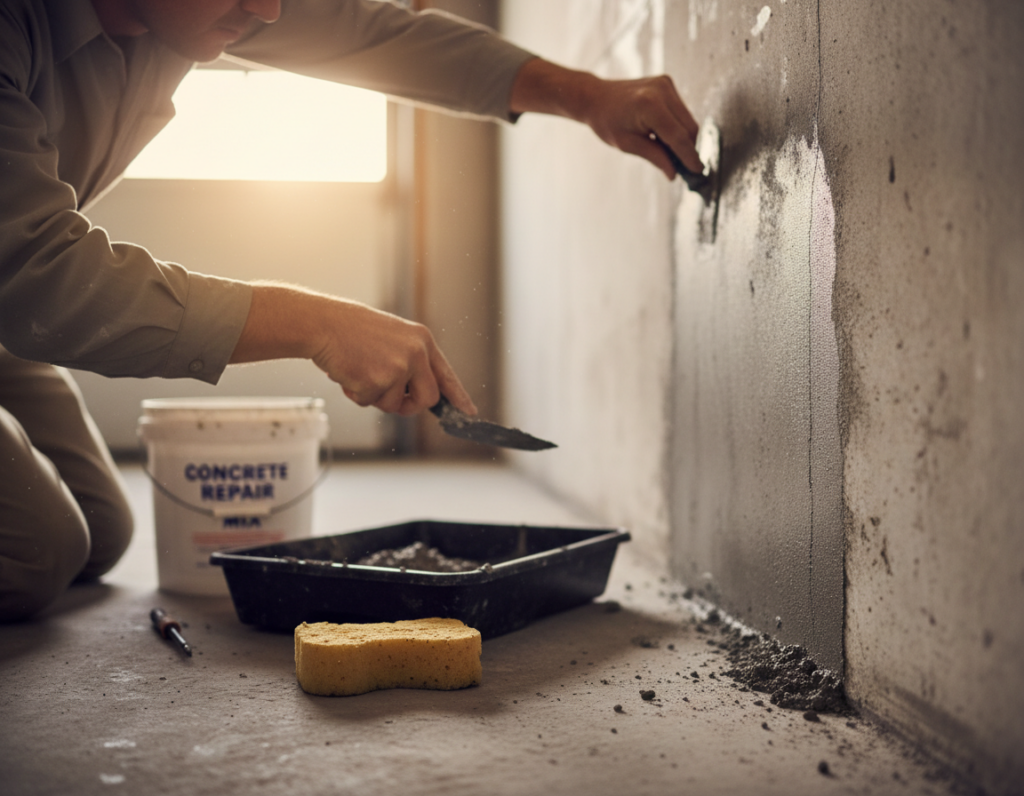
After cleaning and picking your material, apply it as the maker says. For deeper cracks, you might need to use it in layers. Let each layer dry before adding the next.
Step 4: Finish and Inspect
After putting on the repair material, smooth it out with a putty knife or trowel. Check the repair to make sure it matches the area around it. Let it dry as the product says.
By following these steps and using the right materials, you can fix small cracks in your concrete walls. This makes your walls stronger and look better.
Repairing Larger Cracks
Larger cracks in concrete walls need a more serious fix. These cracks can show deeper structural problems. So, they need a detailed repair plan.
Epoxy injections are a common fix for big cracks. Epoxy is strong and flexible, sticking well to concrete. It makes a solid and lasting repair.
Concrete patching compounds are also used for big repairs. These compounds fill large gaps and can be colored to blend with the concrete. This makes the repair almost invisible.
Comparison of Repair Methods
| Repair Method | Materials Needed | Skill Level Required |
|---|---|---|
| Epoxy Injections | Epoxy resin, injection equipment | Professional |
| Concrete Patching Compounds | Patching compound, trowel, sandpaper | Intermediate to Professional |
Choosing the right repair method depends on the crack’s size. For big cracks, getting help from a pro is usually best. They can make sure the repair is strong and works well.
Techniques for Structural Cracks
Fixing structural cracks in concrete walls needs a good grasp of the causes and the right fixes. These cracks can weaken a wall a lot. So, it’s key to use good repair methods.
One top method is using carbon fiber reinforcement. This involves sticking carbon fiber strips on the crack. It adds strength and stability to the wall. This method is not too invasive and works well for some cracks.
Other ways include epoxy injection and grouting. Epoxy injection fills the crack with a strong glue. Grouting uses a hardening mix to fill the crack. The best method depends on the crack’s size, location, and cause.
Comparison of Repair Techniques
| Technique | Application | Effectiveness |
|---|---|---|
| Carbon Fiber Reinforcement | Large structural cracks | High |
| Epoxy Injection | Small to medium cracks | High |
| Grouting | Wide cracks or voids | Medium to High |
Knowing the right concrete crack repair or wall crack repair technique is vital. It ensures the structure lasts long and stays safe. By picking the best method, people can fix their concrete walls well.
Post-Repair Considerations
Fixing concrete wall cracks is not a one-time job. It needs ongoing care to last long.
After fixing the crack, watch it and the area around for damage or movement. Regular checks can spot problems early.
To keep your concrete walls strong, follow these tips:
- Check the fixed area often for new cracks or movement.
- Keep the area clean and free of debris.
- Watch the weather and protect your walls in extreme conditions.
- Use a sealant to shield the wall from the environment.
By doing these things, your concrete wall repair will stay effective. Remember, a lasting repair needs both the initial fix and ongoing care.
Preventative Measures for Concrete Walls
Preventing cracks in concrete walls is key to keeping structures strong and lasting. By taking steps early on, you can avoid costly repairs. This means less need for fixing cracked concrete.
Choosing the right concrete mix is a big step. It means picking the right mix of cement, water, and aggregates. This makes the concrete strong and durable.
Proper curing is also essential. It keeps the concrete moist and at the right temperature. This helps it set and harden well.
Regular checks and maintenance are important too. Look for damage or wear on the walls. Fix issues fast and apply protective coatings to keep the concrete safe from the weather.
- Proper drainage to prevent water accumulation
- Control joints to manage shrinkage
- Reinforcement with materials like rebar or fiber mesh
By using these steps, you can lower the chance of cracks. This keeps your concrete walls in great shape for longer.
Conclusion: Ensuring a Durable Repair
Fixing cracks in concrete walls needs careful attention and the right methods. Knowing why cracks happen and how bad they are helps. This way, homeowners can keep their walls strong.
For small cracks, you can try fixing them yourself. But, big or structural cracks need a pro. Getting expert help is key to avoid more damage and make the fix last longer.
Keeping up with maintenance is also important. Regular checks and quick fixes can help your walls last longer. A good repair and regular care can protect your property and keep it safe.
Being proactive with repairs can save you time and money. Whether it’s a small crack or big damage, doing the right thing ensures a strong and lasting fix.