

Anúncios
Getting the right tools is key to mastering woodworking. Choosing the right blade is crucial for safety and quality. Many beginners find it hard to decide between manual and power tools.
Using a DeWalt miter saw or a Milwaukee jigsaw can make tasks easier. These tools are powerful and reliable.
- Selecting the correct blade ensures safety and accuracy.
- Precision techniques prevent wasting expensive materials.
Before starting, builders need to know their project details. Accuracy is vital for professional-looking results. Using the best wood measuring techniques helps avoid wasting expensive lumber.
Anúncios
Small mistakes can cause big problems during assembly. It’s important to get it right from the start.
Choosing the wrong tool can ruin your project. The right blade depends on the cut angle. This guide will help you find the perfect tool for your workshop.
Anúncios
Learning how to measure wood correctly saves time. Every craftsman should focus on precision. With the right tools, you’ll cut with confidence.
Understanding Different Types of Saws
The world of woodworking is filled with various saws, each designed for specific tasks. They offer unique benefits. It’s crucial to know these differences to pick the right tool for your project.
Woodworking saws can be broadly categorized into several types. These include circular saws, jigsaws, table saws, and band saws. Each type has its own set of characteristics and is suited for particular cutting operations.
Circular saws are versatile and widely used for making straight cuts in wood. They come in various sizes and can be used for ripping lumber or making crosscuts.
Jigsaws, on the other hand, are ideal for curved cuts and irregular shapes. Their ability to maneuver through tight curves makes them a favorite among woodworkers for detailed work.
Table saws are powerful tools used for precise cutting. They are often considered the centerpiece of many woodworking shops. They are excellent for ripping large panels and making accurate crosscuts.
Band saws are known for their ability to cut curves and are often used for resawing lumber. They offer a high degree of flexibility and are useful for a variety of woodworking tasks.
To better understand the differences between these saws, let’s examine their key characteristics in the following table:
| Saw Type | Primary Use | Cutting Capability |
|---|---|---|
| Circular Saw | Making straight cuts | Ripping, crosscutting |
| Jigsaw | Curved cuts, irregular shapes | Curved cutting, detail work |
| Table Saw | Precise cutting, ripping large panels | Ripping, crosscutting with high accuracy |
| Band Saw | Cutting curves, resawing lumber | Curved cutting, resawing |
Accurate wood measurement methods are essential when working with these saws. They ensure precision and minimize waste. Measuring wood for accuracy involves understanding the saw’s capabilities and limitations.
By understanding the different types of saws and their applications, woodworkers can choose the right tool for their specific needs. This enhances the quality of their work and improves efficiency.
Key Factors to Consider When Choosing a Saw
Choosing the right saw for woodworking is a big decision. You need to think about what your project needs.
The type of wood you’re working with matters a lot. Hardwoods like oak and maple are denser. They need a saw with more teeth for a smooth cut.
The size of your project is also key. Big projects need strong saws for long cuts. Smaller projects might do well with lighter, portable saws.
Don’t forget about your budget. Saws can cost a lot or a little, depending on what they can do. You should find a saw that fits your budget and needs.
Key Considerations for Saw Selection
- Type of Wood: Different woods need different saws.
- Project Scale: Big projects need strong saws.
- Budget: Choose a saw that fits your budget.
It’s also important to think about the saw’s accuracy. This means looking at the blade quality and the saw’s design. These things help make precise cuts.
By looking at these factors, you can pick a saw that’s right for your woodworking.
Specific Uses for Each Type of Saw
Woodworking needs the right saw for precise cuts and quality projects.
Different saws are made for specific tasks. Cross-cutting saws are best for cuts across the wood grain. Rip-cutting saws work better for cuts along the grain.
Cross-cutting is key in woodworking. It’s used in framing, furniture making, and trim work. A miter saw or a circular saw with a cross-cutting blade is perfect for this.
Rip-cutting cuts wood with the grain. It’s needed for projects like cabinets or shelving. A table saw or a circular saw with a rip-cutting blade is best for this.
Making curved cuts needs the right saw too. Jigsaws or bandsaws are used for these cuts. They give the flexibility and control needed for complex curves.
Knowing the uses of each saw improves your woodworking. Choosing the right saw for the job means precise cuts and successful projects.
For example, building a wooden chair might need cross-cuts and curved cuts. Using the right saw for each ensures top-notch results.
Corded vs. Cordless Saws: Which is Better?
Woodworkers often debate between corded and cordless saws. Each type has its own benefits. It’s key to think about what you need and like.
Corded saws give steady power and are great for tough tasks. They’re best for long cuts. But, they need a power source, which can make moving around hard.
Cordless saws are easy to move and use anywhere. They’re perfect for jobs that need you to move around. New battery tech makes them strong for many tasks.
Think about your projects and where you work. For steady power and fixed spots, corded saws are good. For moving around, cordless saws are better.
Using either saw well means following tips, like measuring wood correctly. This helps you work better and more accurately.
- Corded saws provide consistent power and are suitable for heavy-duty, continuous cutting tasks.
- Cordless saws offer portability and are ideal for projects requiring mobility and flexibility.
- Consider your work environment and project requirements when deciding between corded and cordless saws.
Safety Features to Look For
Safety is key in woodworking, and the right saw can lower accident risks. It’s important to look at the safety features of a saw. These features help protect you from dangers.
One key safety feature is the blade guard. It covers the blade when not in use, avoiding accidental contact. Some saws have automatic blade guards. These retract when the saw is on and cover the blade when stopped.
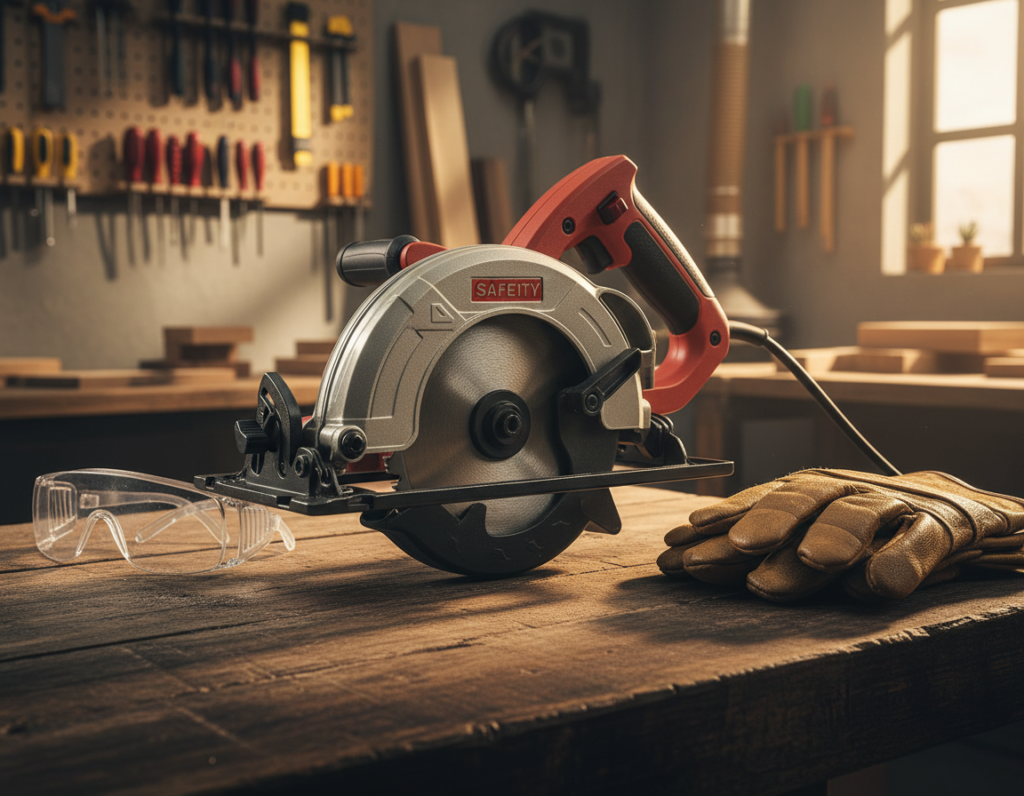
Another important feature is the anti-kickback mechanism. Kickback happens when the saw blade gets stuck, jerking the saw back. Anti-kickback mechanisms, like riving knives or splitters, keep the kerf open. This prevents the blade from binding.
Accurate measurement is also crucial for safety. Knowing how to measure wood correctly can prevent accidents. For example, wrong measurements can cause improper cuts. These might make the wood bind on the blade or cause kickback.
Key Safety Features Comparison
| Safety Feature | Description | Benefit |
|---|---|---|
| Blade Guard | Covers the blade when not in use | Prevents accidental contact with the blade |
| Anti-kickback Mechanism | Prevents the saw from jerking back | Reduces the risk of kickback injuries |
| Accurate Measurement Tools | Ensures precise cuts | Minimizes the risk of accidents due to incorrect cuts |
When picking a saw, look for these safety features. A saw with a strong blade guard, effective anti-kickback mechanism, and tools for accurate measurement boosts your safety in the workshop.
Choosing the Right Blade
To get top-notch results in woodworking, picking the right blade is key. The correct blade can greatly improve your cuts. This makes a big difference in your project’s final look.
When picking a blade, think about the cut you need to make and the material you’re working with. Different blades are made for different tasks. For example, some are for ripping, others for cross-cutting, and some for detailed designs.
- Rip Blades: These are for cutting with the wood grain. They have fewer teeth and are best for long, straight cuts.
- Cross-Cut Blades: These have more teeth than rip blades. They’re used for cutting across the wood grain, giving a smoother finish.
- Combination Blades: These can do both ripping and cross-cutting. They’re handy for many tasks.
The blade’s material is also important. High-carbon steel blades are durable and resist wear. Carbide-tipped blades stay sharp for a long time.
By knowing what your project needs and choosing the right blade, you can make your woodworking better. Your projects will be more accurate and of higher quality.
Ergonomics and Design
A saw’s design greatly affects how well you can measure wood and how comfortable it is to use. It’s important to think about how the saw’s design impacts your comfort and work efficiency.
The weight and how easy a saw is to move around are key. A light saw that’s easy to handle can help prevent tiredness. This is crucial for projects that need precise wood measurements.
How comfortable the handle is matters a lot too. A saw with a handle made for comfort can give you a better grip. This helps avoid accidents and makes it easier to control the saw. This, in turn, makes your cuts and measurements more accurate.
In the end, a saw that focuses on ergonomics can make woodworking better. It helps reduce tiredness and improves control. This leads to more accurate work and a more enjoyable time at the workbench.
Brand Considerations
Choosing a saw from a reputable brand is key for accurate wood measurement and project success. Top brands offer quality products that have been tested and proven over time.
It’s important to look at a brand’s reputation for reliable and durable saws. Brands with a long history usually have a good track record. Customers can check this through reviews and ratings.
When picking a brand, think about their warranty and customer support. A good warranty means you’re covered if there are any issues. It gives you peace of mind.
| Brand | Warranty Period | Customer Support |
|---|---|---|
| Brand A | 5 Years | 24/7 Online Support |
| Brand B | 3 Years | Email Support |
| Brand C | Lifetime | Phone and Email Support |
The table shows different brands offer different warranties and support. This is crucial for professionals who need their saws for daily tasks and precise work like measuring wood.
In the end, choose a brand that meets your quality, support, and value needs. By considering these, you’ll make a choice that improves your woodworking experience.
Maintenance Tips for Your Saw
Keeping your saw in good shape is crucial. It helps your saw last longer and work better. Regular care also makes sure you’re safe while using it.
There are a few key areas to focus on for maintenance. These include cleaning, oiling, and sharpening the blade. Each part is important for your saw’s performance and life span.
Cleaning your saw often removes dust and debris. This can cause damage over time. Use a soft brush or cloth to clean the saw, focusing on the blade and around it.
Oil is also important for your saw. It helps the moving parts run smoothly and prevents overheating. Always use the oil type recommended by the saw’s maker.
Sharpening your blade is essential for good cuts. A dull blade can lead to bad cuts and strain on the saw. Sharpening or replacing the blade regularly is key.
| Maintenance Task | Frequency | Benefits |
|---|---|---|
| Cleaning | After each use | Reduces wear and tear, prevents dust buildup |
| Lubrication | Every 10 hours of use | Reduces friction, prevents overheating |
| Blade Sharpening | Every 5 hours of use | Maintains cutting efficiency, ensures accurate cuts |
By sticking to these maintenance tips, you can make your saw last longer. It will also keep working at its best.
Enhancements and Accessories
Investing in enhancements and accessories can greatly improve your woodworking experience. Consider adding saw stands, tables, and dust collection systems to your saw. These can make your saw much more functional.
A saw stand is a must-have. It gives your saw a stable base, leading to more accurate cuts and less fatigue. It also keeps your work area tidy, making project management easier.
A dust collection system is also key. It keeps your work area clean by collecting sawdust and debris. This makes your workspace safer and clearer.
Measuring wood accurately is crucial for precise cuts. Use a combination square or digital caliper for this. Always take multiple measurements to ensure accuracy and use the right tools.
There are many other enhancements available, like laser guides and rip fences. These can boost your saw’s accuracy and efficiency. By choosing the right enhancements and accessories, you can enhance your woodworking experience and productivity.
- Saw stands for stability and organization
- Dust collection systems for a cleaner work area
- Laser guides for improved accuracy
- Rip fences for precise cuts
Final Thoughts on Selecting the Best Saw
Choosing the right saw for woodworking depends on several things. These include your personal preference, experience level, and what your project needs. It’s important to know the different types of saws and their uses.
A wood measurement guide can help a lot. It helps you measure and cut wood accurately for your project. Following tips for measuring wood correctly ensures you get precise cuts and save wood.
The best saw for you should have good performance, safety features, and be easy to use. Think about your experience and the projects you do most. This way, you can choose a saw that improves your woodworking.
By considering these points and staying informed, you can pick a saw that fits your needs. This will help you get professional-quality results in your woodworking projects.