
Anúncios
- Quality gear ensures safety and precision for new projects.
- Starting with basic items builds a strong woodworking foundation.
- A simple kit is enough to create functional home decor.
Starting a new woodworking hobby is very rewarding. You get to make beautiful items from simple lumber. Having the right tools makes a big difference when you start.
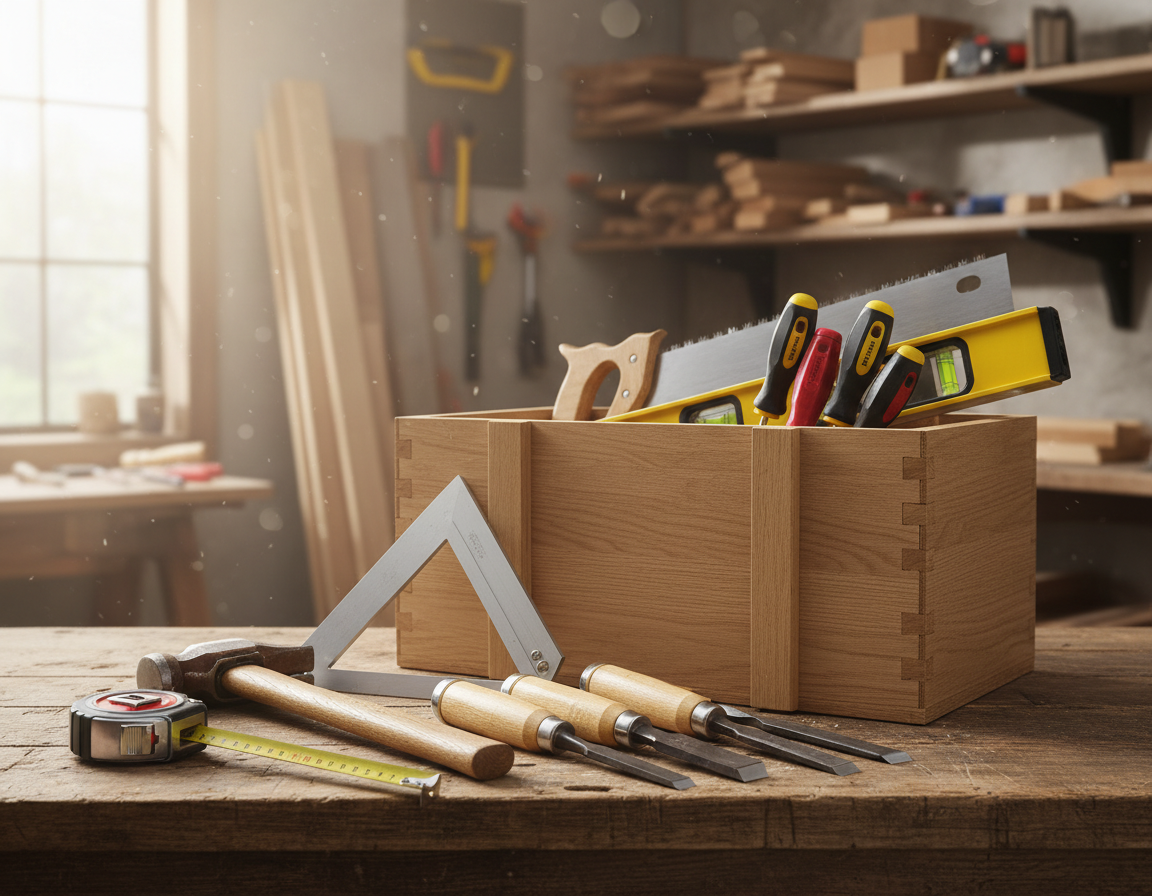
Building a solid beginner carpentry toolkit means focusing on versatile items. You don’t need a huge workshop to enjoy this hobby. A few quality tools let you complete many projects safely and well.
Many people feel lost at local hardware stores like Home Depot. Start with the basics to improve your skills and confidence. This guide shows you which tools for beginners are worth your money.
Anúncios
Learning the basics helps you become a skilled artisan. Soon, you’ll turn raw boards into useful furniture. Let’s look at the essential items you need for your first project today.
Understanding the Basics of Carpentry
Learning the basics of carpentry is key for starting any project. It could be a simple birdhouse or a complex piece of furniture. Carpentry is about working with wood to build and fix structures and fixtures. It needs both manual skill and the right tools for professional results.
Good tools are crucial for any carpentry project. They make the work easier and improve the quality. Beginners should invest in basic carpentry tools. These tools are essential for learning the skills and techniques needed in carpentry.
Anúncios
Here are some key aspects of carpentry that beginners should understand:
- The importance of measuring accurately
- Understanding different types of wood and their uses
- Familiarity with basic hand tools such as hammers, saws, and chisels
- The role of power tools in simplifying tasks
Having the right tools and knowing how to use them is vital for beginners. It’s not just about having tools; it’s about using them well to create quality work.
For those new to carpentry, start with the basics and add more tools as you go. This approach helps manage costs and master the skills needed for more complex projects.
Essential Hand Tools for Beginners
Starting with carpentry means knowing the best tools for beginners. For new woodworkers, the right hand tools are key. They help finish projects well and fast.
Measuring tools are the base of carpentry. They keep your work accurate and precise. You’ll use tape measures and squares a lot. Tape measures help measure lengths and widths. Squares make sure cuts and corners are right.
Cutting tools are crucial for beginners. Hand saws and utility knives are must-haves. Hand saws cut through wood, and utility knives are for small, detailed cuts.
Fastening tools, like hammers and screwdrivers, are needed for putting your project together. Hammers drive nails, and screwdrivers drive screws. Both are vital for your project’s strength.
| Tool Category | Tool Name | Description |
|---|---|---|
| Measuring Tools | Tape Measure | Used for measuring lengths and widths of materials. |
| Measuring Tools | Square | Ensures accurate angles and alignments. |
| Cutting Tools | Hand Saw | Used for cutting through wood. |
| Cutting Tools | Utility Knife | Used for making detailed cuts. |
| Fastening Tools | Hammer | Drives nails into wood. |
| Fastening Tools | Screwdriver | Drives screws for assembly. |
Learning to use these woodworking tools for beginners is a great start. It prepares you for success in carpentry.
Power Tools Every Beginner Should Consider
Power tools are key for any carpentry job. Knowing the basics is crucial for beginners. These tools make the work easier and improve the quality.
For beginners, starting with the basics is important. Essential power tools include circular saws, drills, drivers, and sanders.
Circular Saws
Circular saws are great for straight cuts in wood. They’re versatile and useful for many tasks, like ripping lumber or making cross-cuts.
Drills and Drivers
Drills are for drilling holes, and drivers for screws. Many tools now do both, making them very handy.
Sanders
Sanders smooth out wood surfaces, getting them ready for finishing. There are different types, like belt sanders and orbital sanders, each for specific uses.
| Tool | Primary Use | Key Feature |
|---|---|---|
| Circular Saw | Making straight cuts | Adjustable cutting depth |
| Drill/Driver | Drilling holes and driving screws | Variable speed control |
| Sander | Smoothing wood surfaces | Dust collection system |
In conclusion, power tools are essential for carpentry. By knowing and using the right tools, beginners can succeed.
Safety Equipment and Gear
Safety equipment is not just an accessory, it’s a necessity in carpentry. It’s key to preventing accidents and injuries. As a beginner, knowing the importance of safety gear is crucial for a safe and healthy workspace.
Protecting your senses is a big part of safety in carpentry. Eye protection is vital when using power tools or handling materials that could fly apart. Safety glasses and goggles keep your eyes safe from debris.
Hearing protection is also very important. Too much noise from power tools can harm your hearing permanently. Earplugs and earmuffs help protect your hearing.
Work gloves are essential for preventing injuries. They help you grip things, protect your hands from splinters and cuts, and offer some protection against power tools.
To help you understand the different types of safety equipment available, here’s a comparison table:
| Safety Equipment | Purpose | Examples |
|---|---|---|
| Eye Protection | Protects eyes from debris | Safety glasses, Goggles |
| Hearing Protection | Prevents hearing damage | Earplugs, Earmuffs |
| Hand Protection | Prevents cuts and splinters | Work gloves |
By investing in the right safety equipment, beginners can greatly reduce injury risk. This makes their work environment safer. It ensures their well-being and improves their carpentry experience.
Must-Have Tool Storage Solutions
Effective tool storage is a key part of woodworking that beginners often miss.
Starting your carpentry journey means keeping your workspace tidy. Good tool storage keeps tools safe and easy to find. It also makes you work better.
Choosing between toolboxes and tool bags is a common dilemma for beginners. Each has its own pros and cons.
- Toolboxes are sturdy and can be locked for safety. But they’re big and hard to carry.
- Tool bags are easy to move and handy. Yet, they might not be as strong or secure as toolboxes.
Deciding between a toolbox and a tool bag depends on your needs and likes. Think about the projects you’ll do and how often you’ll work.
To keep your space organized, sort your tools by function. Give each group a spot. This makes finding tools quicker.
Also, set up a routine for tool care and storage upkeep. Clean and check your tools and storage often.
Getting the right tool storage and keeping your space neat boosts your carpentry skills and efficiency.
Choosing Quality Tools on a Budget
Getting the right carpentry tools doesn’t have to cost a lot. As a beginner, finding tools that are both good and affordable is key.
Look for well-known brands that are known for their quality and lasting power. These brands offer tools at various prices, helping you stay within your budget.
Here are some tips for choosing quality tools on a budget:
- Research different brands and their offerings.
- Read reviews from other customers to understand the tool’s performance and durability.
- Compare prices across different retailers, both online and in-store.
- Consider buying last year’s model or a refurbished tool to save money.
Some top brands for beginners include DeWalt, Makita, and Stanley. They’re known for quality and have tools at various prices.
| Brand | Tool | Price Range |
|---|---|---|
| DeWalt | Cordless Drill | $50-$100 |
| Makita | Circular Saw | $70-$150 |
| Stanley | Tape Measure | $5-$20 |
When buying tools, think about where to shop. Online sites like Amazon and Home Depot offer good prices and a wide range. Local hardware stores also have great advice and support.
Essential Carpentry Tool Maintenance Tips
Proper care and maintenance of your carpentry tools can make them last longer. Regular upkeep ensures your tools work well and keeps you safe at work.
Cleaning is key to tool maintenance. Dirt, dust, and debris can harm tool performance. For hand tools, a quick wipe with a cloth works. For power tools, check the manufacturer’s cleaning guide.
Sharpening your cutting tools is also vital. Dull tools are less effective and can be dangerous. They need more force, which raises accident risks. You can sharpen tools with whetstones or sharpening steels.
Tips for Effective Tool Maintenance
- Regularly check your tools for wear and damage.
- Store tools in a dry, clean spot to avoid rust.
- Always follow the manufacturer’s maintenance and repair advice.
- Keep cutting tools sharp for better performance and safety.
Understanding Different Types of Wood
Wood is a key material in carpentry, with many types to choose from. Each type has its own special features. Knowing these differences helps pick the best wood for your projects.
Softwoods come from coniferous trees and are softer and less dense than hardwoods. They are often cheaper and easier to work with. This makes them great for beginners.
Hardwoods, on the other hand, come from deciduous trees. They are denser and harder, making them more durable and giving a finer finish. The main difference between softwood and hardwood is their cellular structure and the trees they come from.
Choosing the Right Type of Wood
When picking between softwood and hardwood, several things matter:
- Project Purpose: For furniture or projects needing durability, hardwoods like oak or maple are better.
- Budget: Softwoods are more affordable.
- Workability: Softwoods are easier to cut and shape.
| Type of Wood | Characteristics | Common Uses |
|---|---|---|
| Pine (Softwood) | Soft, lightweight, easy to work with | Framing, furniture making |
| Oak (Hardwood) | Hard, durable, attractive grain pattern | Furniture making, flooring |
| Maple (Hardwood) | Hard, resistant to wear, light color | Furniture making, cabinetry |
In conclusion, knowing the different types of wood is key in carpentry. By understanding softwoods and hardwoods, beginners can plan better and get better results.
Common Beginner Carpentry Projects
With the right tools, you can start many fun and rewarding projects. These beginner-friendly projects are great for learning woodworking. They need little equipment and know-how.
Building simple shelves and making a birdhouse are perfect for beginners. These projects help you learn basic carpentry skills. Plus, you get to make useful items.
Building Simple Shelves
Building simple shelves is a great first project. You’ll need a saw, drill, and sandpaper. First, measure and cut the wood for your shelves.
- Measure and cut the wood for the shelf and its supports.
- Assemble the shelves using screws or nails.
- Sand the surfaces to smooth out any rough edges.
- Finish with a coat of paint or varnish to protect the wood.
Making a birdhouse is another fun and easy project. It needs just a few materials and basic tools.
- Cut the wood into the required pieces for the birdhouse’s back, front, floor, and roof.
- Assemble the pieces using nails or screws.
- Add a roof and a perch for the birds.
- Install the birdhouse in a suitable location, such as a tree branch.
These projects are great for practicing your carpentry skills. They can be adjusted to fit your skill level and tools. Starting with simple projects like these will help you become skilled in carpentry.
Joining Techniques for Beginners
Joining techniques are key in carpentry, and beginners need to learn them. Knowing how to join wood well is important for making strong and lasting pieces.
There are a few basic joining techniques beginners should know. Two common ones are butt joints and dowel joints. A butt joint is when two pieces of wood are joined end-to-end. This joint is often made stronger with nails or screws.
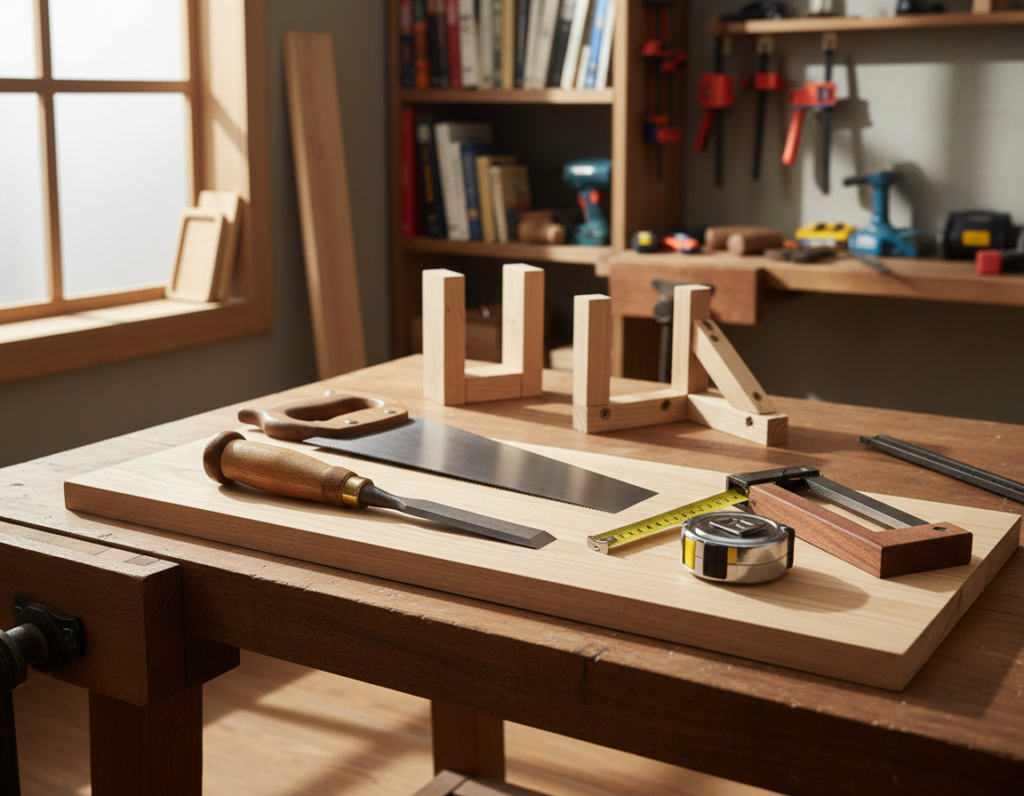
Dowel joints use dowel rods to strengthen the joint. They’re great for making wider panels or when joining edges. To make a dowel joint, you’ll need a drill press or hand drill, dowel rods, and wood glue.
To do these joints right, beginners need some basic tools. For butt joints, you’ll need a hammer, nails or screws, and a tape measure. For dowel joints, you’ll need a drill press or hand drill, dowel rods, and wood glue.
- Butt Joints: Simple to do, needs nails or screws for extra strength.
- Dowel Joints: Adds more strength, needs dowel rods and careful drilling.
Learning these basic joining techniques will make your carpentry projects better. Using the right tools to practice these methods will help beginners build a solid carpentry foundation.
Resources for Learning Carpentry Skills
To master carpentry, continuous learning is key. Beginners can start with online tutorials and courses. These cover the basics of carpentry and how to use a beginner carpentry toolkit.
Websites like YouTube, Udemy, and Coursera offer a wide range of carpentry courses. Community workshops and local classes provide hands-on experience. This lets beginners practice their skills under the guidance of experienced carpenters.
Investing time in learning and practicing carpentry skills will help beginners build a solid foundation. With the right resources and a beginner carpentry toolkit, anyone can become proficient in carpentry.