

Anúncios
Starting a successful build needs more than basic tools. You must understand how wood fibers act under pressure. This knowledge keeps your projects strong for years.
Learning about wood’s inner structure helps avoid common mistakes. New builders often overlook how tree cells grow. These patterns show how wood reacts to water and weight.
When working on woodworking projects, checking the wood grain is crucial. It affects whether a joint holds or breaks. Success in carpentry projects for beginners relies on these choices.
Anúncios
Look closely at the wood’s surface lines. They tell the tree’s growth story over decades. Knowing this lets you cut with precision on every board.
Mastering this skill helps pick the right boards and avoid warping. It turns simple crafts into lasting family treasures.
What Is Wood Grain and Why Does It Matter?
Wood grain is key in woodworking, affecting the quality and life of carpentry projects. It’s the texture and pattern made by wood fibers. The grain’s direction, pattern, and quality impact the wood’s strength, durability, and look.
Anúncios
The importance of wood grain is in its effect on wood’s physical properties. For example, the grain direction affects how wood cuts, shapes, or joins. Knowing about wood grain helps predict how wood will react to different carpentry methods. This ensures the final product is both useful and looks good.
Also, the type of wood grain can change the carpentry project’s look. Different grain patterns bring unique textures and interest to the wood. This makes each piece special. So, understanding and using wood grain is vital for achieving the desired look in carpentry projects.
In short, wood grain is more than just a wood feature; it’s crucial for both the function and beauty of wood products. By grasping what wood grain is and how it impacts carpentry, woodworkers can improve their work’s quality and durability.
The Anatomy of Wood: How Grain Forms
Wood grain patterns are not just for show. They tell us about the tree’s growth. The direction of wood cells determines the grain pattern.
As trees grow, they add new wood cells. The structure and alignment of these cells shape the grain. The tree’s species, climate, and growth conditions also play a role.
Many things can change the grain pattern. The tree’s growth rate and the presence of knots or defects are examples. Knowing these factors helps predict and work with wood grain.
| Factor | Influence on Grain Pattern | Example |
|---|---|---|
| Tree Species | Different species have distinct grain patterns. | Oak has a coarse grain, while maple has a fine grain. |
| Growth Rate | Faster growth can result in a wider grain. | Trees grown in optimal conditions may have a more pronounced grain. |
| Climate Conditions | Climate can affect the grain pattern by influencing growth. | Trees grown in areas with harsh winters may have a more irregular grain. |
Understanding wood grain formation and its factors helps craftsmen. They can better work with wood’s natural beauty.
Types of Wood Grain Patterns
Knowing the different wood grain patterns is key for picking the right wood. These patterns not only look good but also make the wood stronger and more durable.
Wood grain patterns can be grouped by how they look and the direction of the grain. The main types are straight grain, curly grain, figured grain, and irregular grain.
Characteristics and Benefits
Each grain pattern has its own special traits and uses. For example, straight grain wood is very stable. It’s often used in building and making furniture.
Curly grain wood, on the other hand, is loved for its beauty. It’s used in fancy furniture and wood carvings.
| Grain Pattern Type | Characteristics | Best Uses in Carpentry |
|---|---|---|
| Straight Grain | Stable, consistent pattern | Construction, furniture making |
| Curly Grain | Decorative, unique pattern | High-end furniture, wood carvings |
| Figured Grain | Distinctive figure, attractive | Decorative panels, veneers |
Wood grain patterns offer carpenters many choices for their projects. They can pick the best one based on looks and function. By knowing the traits of each pattern, carpenters can improve the quality and strength of their work.
Reading Wood Grain Direction
Every carpenter needs to know how to read wood grain direction. This skill is key for successful projects. It’s important because it changes how wood acts during and after it’s processed.
To find the grain direction, look at the wood fibers’ alignment. The grain usually runs parallel to the tree trunk’s axis. You can see the grain pattern on the wood’s surface to figure out its direction.
There are a few ways to find the grain direction:
- Look at the wood’s surface for patterns or lines that show fiber direction.
- Check the wood’s end grain, where you can see the growth rings.
- Use a sharp tool to see how hard the wood is to split along the grain.
| Method | Description | Effectiveness |
|---|---|---|
| Visual Inspection | Looking for patterns or lines on the wood surface. | High |
| End Grain Inspection | Examining the growth rings on the wood’s end. | High |
| Splitting Test | Using a sharp tool to test resistance to splitting. | Medium |
Knowing the grain direction is crucial for planning cuts. It helps work the wood in a way that boosts its strength and avoids splitting.
By getting good at reading wood grain direction, carpenters can make their projects better and last longer. It’s a basic skill that greatly affects the project’s quality.
The wood grain direction is very important for carpentry. It impacts both the look and the strength of the final product. Working with the grain makes the project more durable and less prone to damage.
How Grain Direction Affects Wood Strength
Knowing how grain direction impacts wood strength is key for great woodworking. The wood grain’s direction greatly affects a wooden item’s strength and durability.
Wood cut or shaped along its grain is stronger and more stable. This is because the wood fibers line up, making it better at handling stress and strain.
On the other hand, cutting wood against the grain weakens it. This happens because the wood fibers get disrupted, making it more prone to splitting or cracking.
| Grain Direction | Effect on Wood Strength | Implications for Woodworking |
|---|---|---|
| With the Grain | Increased strength and stability | Preferred for load-bearing applications |
| Against the Grain | Reduced strength and increased risk of splitting | Should be avoided for critical structural elements |
| Perpendicular to the Grain | Variable strength depending on the specific cut | Requires careful consideration for non-structural applications |
By understanding and working with the grain direction, woodworkers can make stronger, more durable projects. These projects will show off their woodworking skills.
Selecting Wood Based on Grain Patterns
Choosing wood based on grain patterns is key in carpentry. It affects both how well the project works and how it looks. Knowing how grain patterns impact quality is crucial.
Each part of a project needs wood with the right grain pattern. This ensures durability and looks good. Grain patterns greatly influence the strength and stability of furniture parts.
Table Legs and Vertical Members
For table legs and vertical parts, straight grain wood is best. It’s stronger and less likely to warp. This makes it perfect for holding weight and keeping things stable.
Tabletops and Horizontal Surfaces
But, for tabletops and horizontal surfaces, figured or curly grain wood is better. These patterns add beauty and interest. Yet, they need careful planning to stay stable.
Here’s a table showing grain patterns and their uses:
| Component | Recommended Grain Pattern | Reason |
|---|---|---|
| Table Legs | Straight Grain | Strength and Stability |
| Tabletops | Figured or Curly Grain | Aesthetic Appeal |
| Vertical Members | Straight Grain | Structural Integrity |
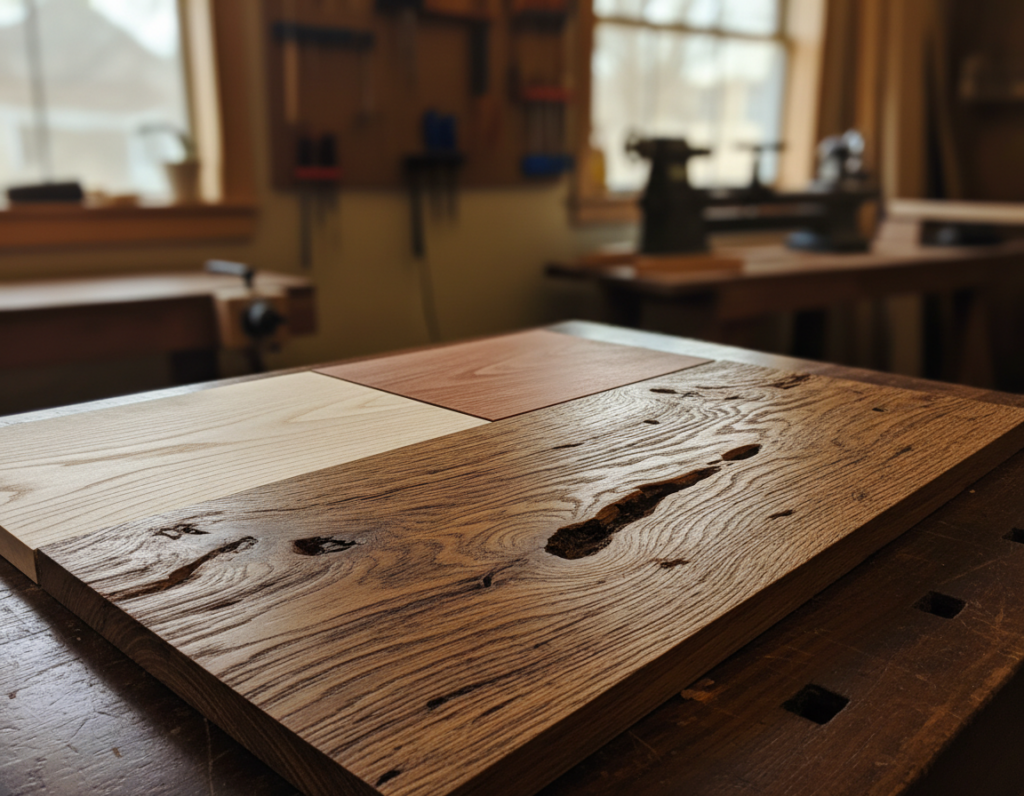
By picking the right wood for grain patterns, carpenters improve both function and beauty. This shows off their advanced skills.
Cutting With the Grain vs. Against the Grain
The way you cut wood can greatly affect your project’s look and strength. Cutting with the grain means you saw in the same direction as the wood fibers. Cutting against the grain is the opposite.
Cutting with the grain is usually better because it leads to a smoother finish. It also lowers the chance of tear-out, which happens when the saw blade pulls away wood fibers. This creates an uneven surface. By cutting with the grain, you can cut more efficiently and get cleaner cuts.
When using hand saws, knowing how the teeth work with the wood grain is key. For cutting with the grain, a rip saw is best. Its teeth are made for cutting along the wood fibers. For cross-cutting, a cross-cut saw is better. It’s designed to cut across the fibers cleanly.
Power Saws and Grain
Power saws also need to consider the grain direction. For example, when ripping lumber with a table saw or circular saw, cutting with the grain is essential. These saws are made for long cuts along the wood’s length. Cutting with the grain prevents binding and kickback.
To get the most out of power saws, picking the right blade is crucial. A blade with the right tooth count and angle can greatly improve your cut’s quality. For instance, a blade with more teeth is better for cross-cutting. It gives a smoother finish.
Understanding how to cut with and against the grain is key. Choosing the right saws and blades for the job can greatly enhance your project’s quality.
Working With Difficult Grain Patterns
Working with tough wood grain patterns can be a big challenge for woodworkers. But, knowing how to handle them can make a huge difference. Wood grain patterns not only look good but also impact the wood’s strength and durability.
When facing hard grain patterns, having the right strategies and techniques is key. Some patterns are more likely to tear or split, mainly if cut or sanded wrong.
- Always cut with the grain to lower the risk of tearing.
- Use sharp tools to lessen the force needed and avoid splitting.
- Adjust your sanding method based on the grain direction.
Different wood grain patterns react differently to various techniques. Below is a table that lists common tough grain patterns and how to work with them.
| Grain Pattern | Characteristics | Working Techniques |
|---|---|---|
| Interlocked Grain | Tends to tear when sanded or cut against the grain. | Use sharp tools, sand with the grain. |
| Irregular Grain | Unpredictable pattern that can be challenging to work with. | Use flexible sanding blocks, adjust cutting tools frequently. |
| Curly Grain | Can be prone to tear-out due to its curly nature. | Use a sharp cutting tool, minimize sanding pressure. |
By knowing the traits of various wood grain patterns and using the right techniques, woodworkers can beat the challenges of tough grain patterns. This way, they can achieve top-notch results in their projects.
Using Wood Grain for Carpentry Projects: Step-by-Step Application
Knowing how to use wood grain is crucial for better woodworking projects. It’s important for beginners to learn about wood grain to get professional results.
First, check the boards for grain quality. Look for any flaws or odd patterns in the grain.
Inspecting Boards for Grain Quality
When checking boards, look for straight and even grain. Boards with straight grain are easier to work with and stronger.
- Check for any knots or warping that could affect the grain quality.
- Examine the board’s surface for any signs of uneven grain direction.
- Consider the type of wood and its natural grain pattern.
Identifying Defects Related to Grain
Defects like knots, checks, and warping can ruin your project. Spotting these early helps you decide how to fix your project.
By carefully checking your lumber and understanding wood grain, you can make your woodworking better. This step-by-step guide is helpful for both beginners and experienced woodworkers.
Common Mistakes When Working With Wood Grain
Carpentry skills are tested when working with wood grain. It’s important to avoid common mistakes. Novice woodworkers often find it challenging. Knowing the common mistakes helps achieve professional-quality results.
One big mistake is cutting against the grain. This can cause tear-out and a rough finish. Always check the grain direction before cutting. Another error is not considering the grain pattern when joining wood. This can lead to uneven joints and a weak structure.
Improving your carpentry skills means understanding wood grain’s characteristics. Some woods warp or shrink more, affecting the project’s stability and look.
By being aware of these mistakes and avoiding them, your carpentry projects will be high quality and look great.
Tools and Techniques for Grain-Aware Woodworking
Woodworking success depends on using the right tools and techniques for the wood grain. Knowing how to work with the grain is key for top-notch finishes and durable products.
Woodworkers need the right tools to work with wood grain effectively. Block planes, smoothing planes, and card scrapers are essential. Each tool has a unique role in woodworking.
Block Planes and Smoothing Planes
Block planes are versatile for tasks like removing material and smoothing surfaces. They’re great for working with tough grain patterns because they can take fine cuts, avoiding tear-out.
Smoothing planes are for fine-tuning surfaces. They remove small imperfections, leaving wood smooth. They’re very useful for figured or irregular grain.
- Block planes are ideal for initial shaping and smoothing.
- Smoothing planes are best for final surface preparation.
- Both tools are essential for grain-aware woodworking.
Card Scrapers for Difficult Grain
Card scrapers are crucial for handling tough grain patterns. They remove tiny amounts of material, making the wood smooth for finishing.
They’re great for woods with interlocked or irregular grain, where planes might cause tear-out. They’re also good for smoothing surfaces with grain direction changes.
| Tool | Primary Use | Benefit for Grain-Aware Woodworking |
|---|---|---|
| Block Plane | Initial shaping and smoothing | Reduces tear-out on difficult grain |
| Smoothing Plane | Final surface preparation | Leaves a smooth finish on various grain patterns |
| Card Scraper | Smoothing surfaces | Effective on interlocked or irregular grain |
Mastering these tools and their use in grain-aware woodworking improves project quality. Whether dealing with easy or hard grain patterns, the right tools and techniques are crucial.
Conclusion
Understanding wood grain is key to making carpentry projects stronger and more durable. Knowing the different wood grain patterns helps craftsmen choose the right materials and design their projects well.
Working with wood grain needs careful attention and a good grasp of how grain direction impacts strength and durability. This guide helps improve carpentry skills, leading to projects that last long.
Using wood grain effectively in carpentry projects requires careful planning and precise cutting. As craftsmen get better at working with different wood types, they can create beautiful and useful pieces. These pieces show their skill in using wood grain.