

Anúncios
Learning how to use a concrete mixer is key for any building project. This tool helps builders work fast and accurately. It’s important to handle it right for safety and the best results.
Keeping your construction equipment in good shape is crucial. Regular maintenance stops expensive repairs during important work times. It also makes your tools last longer, saving you money.
This guide will teach you the best way to use the mixer’s rotating drum. You’ll learn about safety and cleaning tips that pros use. Our aim is to make sure you know the mixing process well.
Anúncios
Starting with the right setup is very important. We’ll cover preparation, mixing ratios, and cleaning up the site in detail. This introduction gets you ready for the full guide.
Key Takeaways:
- Master efficient drum operation methods.
- Prioritize regular tool upkeep.
- Ensure safety at building sites.
Understanding Different Types of Concrete Mixers
Concrete mixers are not all the same. They come in various types, each with its own special features and uses. The mixer you pick can greatly affect your construction project’s quality.
Anúncios
There are many types of concrete mixers out there. You have tilting drum mixers, non-tilting drum mixers, and pan mixers. Tilting drum mixers are great for big projects. They can handle both dry and wet concrete mixes.
Non-tilting drum mixers are better for smaller jobs or special concrete mixes. Pan mixers are super efficient. They’re often used in making precast concrete and other specific tasks.
Keeping your concrete mixer in good shape is key to making it last longer. To do this, regularly check for wear, oil moving parts, and clean it well after each use.
Choosing the right concrete mixer is crucial. Think about your project’s needs. Consider the amount of concrete needed, the type of concrete, and the site’s space.
- Tilting drum mixers: Ideal for large projects, versatile, and can handle a wide range of concrete mixes.
- Non-tilting drum mixers: Suitable for smaller projects or specific concrete types.
- Pan mixers: Highly efficient, often used in precast concrete production.
Essential Safety Equipment and Precautions
Working with a concrete mixer needs you to know about safety gear and precautions. Safety is key when using heavy machinery, and concrete mixers are no different.
Wearing the right protective gear is crucial when using a concrete mixer. This includes protective clothing, safety glasses, and sturdy footwear.
Eye and Respiratory Protection
Eye protection is vital when using a concrete mixer. Debris and dust can cause serious eye injuries. Always wear safety glasses or goggles.
Respiratory protection is also key. The dust from mixing concrete can harm your lungs. Use a dust mask or respirator to reduce exposure.
Hand and Foot Protection
Hand protection is needed to avoid injuries from sharp edges and hot surfaces. Wear gloves made of durable, resistant materials.
Foot protection is also important. Heavy objects can fall or be dropped. Wear steel-toed boots or shoes with good traction to prevent foot injuries.
| Safety Equipment | Purpose |
|---|---|
| Safety Glasses/Goggles | Protects eyes from debris and dust |
| Dust Mask/Respirator | Prevents inhalation of airborne particles |
| Gloves | Protects hands from sharp edges and hot surfaces |
| Steel-Toed Boots/Shoes | Protects feet from heavy objects |
Knowing about safety equipment and precautions helps keep you safe when using a concrete mixer. Following a tool maintenance guide and checklist can also prevent accidents.
Gathering Your Materials and Tools
To mix concrete smoothly, prepare all needed materials and tools first. Know the right amounts of cement, sand, and aggregate.
Cement, Sand, and Aggregate Proportions
The mix’s strength and durability depend on cement, sand, and aggregate ratios. A common mix is 1 part cement, 2 parts sand, and 3 parts aggregate. But, your project might need different ratios.
| Mix Type | Cement | Sand | Aggregate |
|---|---|---|---|
| Standard Mix | 1 | 2 | 3 |
| High Strength Mix | 1 | 1.5 | 2.5 |
| Foundation Mix | 1 | 2.5 | 4 |
Knowing these ratios is key to getting the right concrete. Whether to use pre-mixed or individual components also matters.
Pre-Mixed vs. Individual Components
Pre-mixed concrete is easy and consistent. It’s ready to go when it arrives. But, buying each component gives you more control and knowledge.
Choose based on your project’s size, budget, and needs. For big projects or needing consistency, pre-mixed is best. For small projects or custom mixes, individual components might be better.
Getting your materials and tools ready, and knowing about mix types, are key steps. Making smart choices here helps your project succeed.
Pre-Operation Inspection and Setup
Before you start using a concrete mixer, it’s important to check it thoroughly. This step helps keep the equipment running well and keeps everyone safe.
Inspecting the Drum and Blades
The drum and blades are key parts of a concrete mixer. Look for any damage on the drum, like cracks or rust. Also, check the blades for wear and if they’re straight. Bad blades can mix poorly and harm the mixer.
- Check the drum for cracks or rust.
- Inspect the blades for wear and proper alignment.
- Ensure all bolts and fasteners are tightened securely.
Checking Belts and Motor Connections
It’s also important to check the belts and motor connections. Make sure the belts are not damaged and are tight enough. If the belts are loose or broken, the mixer might not work right.
Make sure the motor connections are tight and not damaged. Look for wear on the motor mounts and check that all electrical connections are safe.
- Inspect belts for wear or cracks.
- Check belt tension.
- Verify motor connections are secure.
Regular care is essential for your concrete mixer’s life and performance. By keeping up with maintenance, you avoid problems and keep your mixer working well.
How to Use Concrete Mixer: Step-by-Step Operating Instructions
To get the most out of your concrete mixer, follow these step-by-step operating instructions. Using a concrete mixer right is key for the best concrete quality and consistency.
Calculating the Right Water Amount
The water needed can change based on the mix and where you are. Start with the least water needed and adjust to get the right slump.
Loading Sequence for Optimal Mixing
How you load the mixer matters a lot. Start with some water, then cement, aggregates, and the rest of the water.
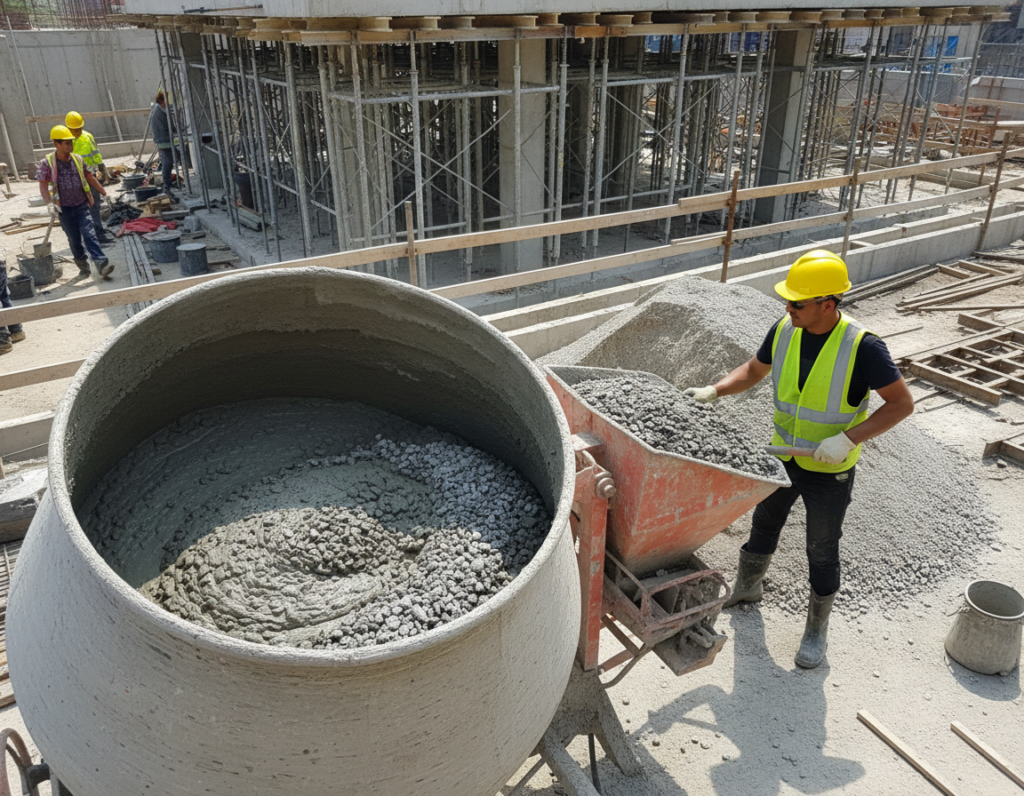
Don’t overload the mixer. It can mix poorly and damage the equipment. Make sure you don’t go over the mixer’s limit.
Tilting Technique for Drum Mixers
For tilting drum mixers, how you tilt affects the concrete flow. Tilt slowly and steadily to avoid spills and ensure smooth flow.
Timing Your Discharge
When to discharge the concrete is very important. Do it when the mix is even and right. Waiting too long can cause the concrete to set in the mixer.
| Step | Description | Key Considerations |
|---|---|---|
| 1. Calculate Water Amount | Determine the right amount of water based on the mix design. | Environmental conditions, mix design specifications |
| 2. Load Materials | Load materials in the recommended sequence. | Water, cement, aggregates, remaining water |
| 3. Mix Concrete | Mix the concrete until it reaches the desired consistency. | Mixing time, mixer speed |
| 4. Discharge Concrete | Discharge the concrete at the right time. | Uniformity of mix, consistency |
By following these steps and considering the important factors, you can use your concrete mixer well. This will help your construction project succeed.
Achieving the Perfect Concrete Mix Consistency
A well-balanced concrete mix is key for strong and finished construction projects. The mix’s consistency affects its workability, strength, and durability.
Many things influence the mix’s consistency. These include the cement to aggregate ratio, the type of aggregate, water amount, and mixing time. It’s important to watch these factors and adjust them as needed for the perfect mix.
To get the ideal mix, knowing each component’s role is crucial. The water-cement ratio, for example, greatly affects the mix’s workability and strength. Too much water can weaken the structure, while too little makes it hard to work with.
Factors Affecting Concrete Mix Consistency
- Water-cement ratio
- Type and size of aggregate
- Mixing time and method
- Admixtures used
Keeping construction equipment, like concrete mixers, in good shape is essential. Regular maintenance, such as cleaning the mixer and checking for wear, improves the mix’s quality.
| Factor | Effect on Consistency | Adjustment |
|---|---|---|
| Water-Cement Ratio | Affects workability and strength | Adjust water or cement content |
| Aggregate Type | Influences mix texture and stability | Change aggregate type or size |
| Mixing Time | Impacts uniformity of the mix | Adjust mixing duration |
By controlling these factors and keeping equipment in good condition, you can make a consistent and high-quality concrete mix. This meets the needs of your construction project.
Construction Equipment Maintenance and Tool Care Strategies
Keeping your concrete mixer in top shape is key. Regular care makes sure it works well and avoids sudden failures. This saves you from expensive fixes.
To keep your concrete mixer running smoothly, create a detailed maintenance plan. This plan should include several important steps to do regularly.
Post-Use Inspection Points
Always check your concrete mixer after use for any damage. Look for:
- Leaks or spills from use
- Wear on parts like the drum and blades
- How the electrical parts and cords are doing
Lubrication Points and Schedules
Lubrication keeps your concrete mixer moving smoothly. Make sure to:
- Lubricate parts as the maker says
- Use the right lubricant and amount
- Keep an eye on lubricant levels to avoid damage
- Belt tension to avoid too much or too little
- How the belts are aligned to prevent uneven wear
- Belts for wear or damage
By sticking to these maintenance tips, you can make your concrete mixer last longer. A well-kept mixer is crucial for any building project. It gives you reliable results and helps avoid expensive fixes.
| Maintenance Task | Frequency | Importance |
|---|---|---|
| Post-use inspection | After each use | High |
| Lubrication | As per manufacturer’s schedule | High |
| Belt tension and alignment checks | Regularly, as per manufacturer’s schedule | Medium |
Cleaning Your Concrete Mixer After Each Use
Cleaning your concrete mixer after each use is crucial. It stops hardened concrete from building up. This buildup can make the mixer less efficient and shorten its life.
To clean your mixer well, try the water and gravel method. Add a bit of gravel and water, then run it for a few minutes.
Water and Gravel Cleaning Method
This method is easy and works great. The gravel scrubs off hardened concrete. The water washes out the dirt.
Always follow the cleaning solution’s instructions and wear safety gear. Gloves and goggles protect you from harmful chemicals.
By following these upkeep tips, your concrete mixer will stay in top shape. It will keep working well for you.
Troubleshooting Common Concrete Mixer Problems
When your concrete mixer breaks down, it can really slow down your project. But, you can fix common issues quickly. Knowing how to spot and solve problems is key to keeping your tools in top shape.
Concrete mixers can still have problems even with regular care. It’s important to know how to fix these issues. This way, you can avoid long delays and keep your project on schedule.
Checking Power Supply and Connections
The first thing to do is check the power and connections. Make sure the mixer is plugged in right and the power cord and outlet are okay. A bad power supply is often the reason for a mixer not working.
- Verify that the power cord is not damaged.
- Check the outlet to ensure it’s working correctly.
- Inspect the plug for any signs of wear or damage.
If you’re using an electric mixer, also check the circuit breaker or fuse box. Make sure the circuit hasn’t tripped or a fuse hasn’t blown.
Inspecting the Motor and Capacitor
If the power and connections are fine, then check the motor and capacitor. The motor is the mixer’s heart, and problems with it can cause issues.
Look out for signs like unusual noises, overheating, or not starting. If you see these, the motor might need a check or a new one.
The capacitor is also very important. A bad capacitor can stop the motor from starting or make it run poorly. Look for any damage or wear on the capacitor.
By following these steps, you can find and fix common mixer problems. This will help you get your project moving again without too much delay. Regular checks on the power supply and key parts like the motor and capacitor are vital for your equipment’s health and performance.
Tool Maintenance Techniques for Long-Term Efficiency
Keeping your concrete mixer in top shape is all about regular maintenance. This practice not only makes the equipment last longer but also keeps it running smoothly. It’s a smart way to get the most out of your investment.
Maintenance is more than just a routine. It’s about daily checks, regular servicing, and protecting your equipment from the elements. By being proactive, you avoid costly repairs and unexpected downtime.
Winter Storage and Protection
As winter comes, you need to protect your concrete mixer from the cold. Freezing temperatures can harm the equipment if it’s not ready.
- Store the mixer in a dry, sheltered spot to shield it from snow and ice.
- Drain any water left in the mixer to stop it from freezing and causing damage.
- Apply lubricant to moving parts to stop corrosion and keep things running smoothly.
- Use a waterproof cover to keep the mixer dry and free from debris.
Working with a concrete mixer in hot weather needs extra care. The heat can make the equipment overheat and affect the concrete mix quality.
- Check the mixer’s cooling system often to make sure it works right.
- Keep the mixer clean and well-lubricated to cut down on friction and overheating.
- Watch the mixer and concrete mix temperatures to avoid overheating.
- Use shade or extra cooling if the mixer is in very hot weather.
By following these maintenance tips and thinking about the weather, you can make your concrete mixer last longer. It will keep working efficiently for you.
Conclusion
Learning how to use and maintain a concrete mixer is key for any construction project’s success. Knowing the different types of mixers and following safety rules helps keep everyone safe.
Using a concrete mixer well means more than just turning it on. It’s about regular care to make it last longer. Good maintenance makes the mixer work better and improves your projects.
This article has given you tips to better care for your construction tools. By using and maintaining your equipment well, you’ll get better results. This also helps your tools last longer.
FAQ
What are the main differences between a portable drum mixer and a mortar mixer for residential projects?
Portable drum mixers, like Kushlan or Belle, use a rotating drum with blades. They’re great for mixing concrete with big chunks. Mortar mixers, from Multiquip, have stationary drums with paddles. They’re made for mixing sand and cement, making it smooth for masonry.
Which safety gear is essential when operating heavy-duty mixing equipment?
Wear 3M respiratory protection to avoid dust. Use DeWalt safety glasses for your eyes. Heavy-duty gloves and steel-toed boots protect you from injuries.
What is the most effective loading sequence for achieving a consistent concrete mix?
Start with water, then coarse aggregate, and half the sand. Once spinning, add cement and the rest of the sand and water. This avoids clumps and ensures even mix.
How can I implement a professional tool maintenance checklist for my concrete mixer?
Start with a pre-use check of the drum and motor. After use, check the belts and for leaks. These steps keep your mixer running well and save time.
What are the best construction tool care strategies for maintaining equipment in extreme weather?
Keep the motor cool in summer with shade and breaks. Store in a dry place in winter to prevent damage. These steps keep your tools working well.
What is the recommended method for cleaning a mixer to prevent hardened concrete buildup?
Use the water and gravel method. Add gravel and water to the drum and run it for 15 to 20 minutes. This cleans the blades and surfaces.
Why is consistent construction equipment maintenance important for project timelines?
Regular maintenance prevents breakdowns and ensures smooth operation. Follow tips like lubricating every 40 hours to keep your mixer running well.
What should I troubleshoot if my electric mixer motor fails to turn over?
First, check the power and cord. If it’s right, look at the start capacitor and reset button. Knowing these basics helps you fix simple issues fast.
How often should I check the belt tension and alignment on my mixer?
Check belts every 10 to 15 hours. Loose belts slip, and tight ones damage bearings. Regular checks keep the motor working efficiently.